Studio Magazine #2

Bookshelf

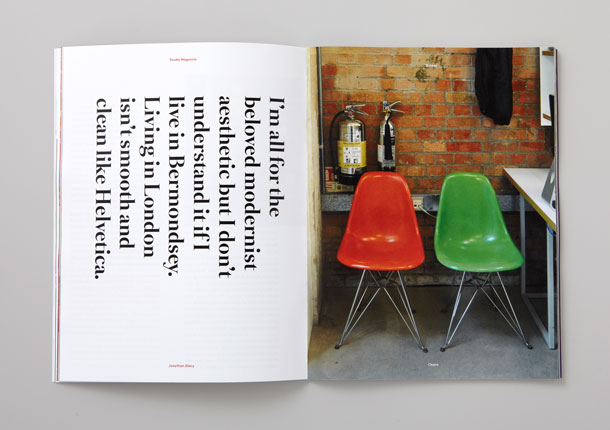
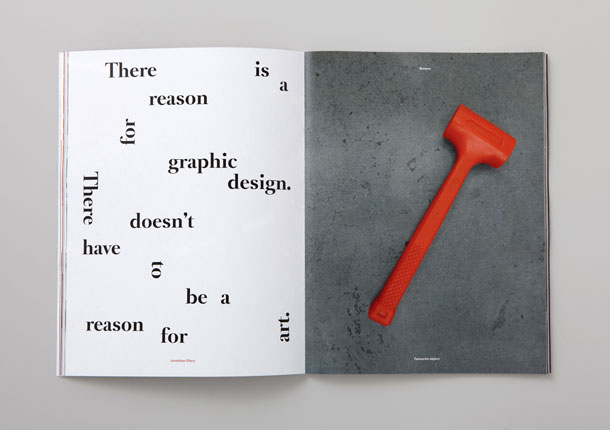
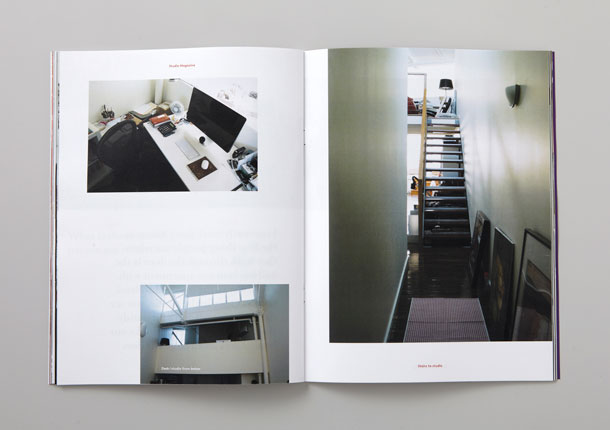
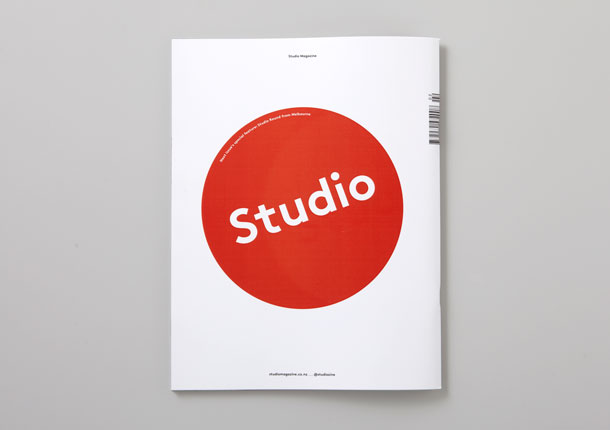
Get it while it’s hot. Studio Magazine is the international magazine about making places; profiling studios from a range of fields, Studio Magazine features creative spaces from New York to Paris to Auckland. The magazine was born out of the love of print, by a threesome of graphic designers-come-editors Clem Devine and Zoe Ikin (Alt Group) and Sam Trustrum (Studio Alexander). Issue Two is available to buy now – limited to a run of a mere 250 – indulging in gold foil (fancy), large format imagery and obsessive typography to cover a range of studios from Pentagram to Leonardo Sonnoli to a lonely Brooklyn artist.

Issue Three is in the pipeline and full to the gunnels (including contributions from our very own Emma) but suggestions for interesting spaces to profile are always welcome: editor@studiomagazine.co.nz or @studiozine or facebook.com/studiomagazine

Issues One and Two of the magazine are available for purchase from www.studiomagazine.co.nz, here’s a small taster from our girl Emma.

studio magazinestudio magazinestudio magazinestudio magazinestudio magazinestudio magazinestudio magazinestudio magazinestudio magazinestudio magazine

Rutger Paulusse {New York}

Outstanding individuals

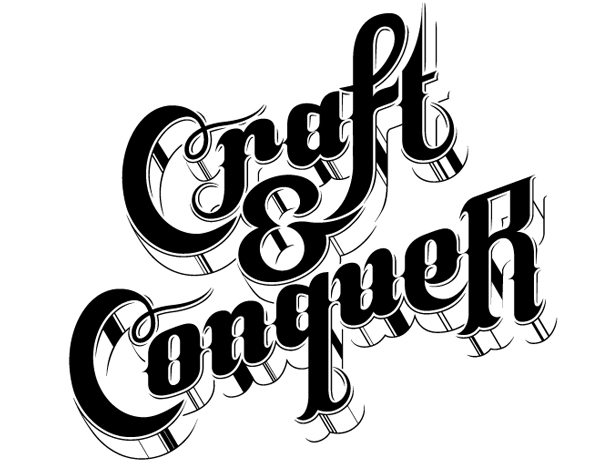
Allow us to regale you with a tale of perseverance, triumph and the American dream… Hailing from Eindhoven, the Netherlands, meet Rutger Paulusse. His misspent youth was pivoted around graffiti-based antics, as he grew older his interest for letters only swelled; he kept drawing and tagging, drawing and tagging. Because of that, a friend of his, a tattoo-artist, motivated our young hero to go to art-school. He’d never thought of that… thus registered himself for admission. Alas, he got declined.

But our champion’s story didn’t end there. Far from it. His resolve was only strengthened so for a year following he packed in relevant courses to create a portfolio that would hook him up ~ even took painting courses with a bunch of housewives. It worked. There he was!

Rutger says: “I was afraid of the computer so the first year I did everything by hand, but when I gravitated towards Graphic Design I really needed some computer skills. So I bought a computer; and fell in love with Adobe Illustrator. Luckily she fell in love with me too. Since that day I’ve loved to draw and sketch my type, and then bring it onto the screen to refine and stylize it until it’s just perfect.”

Following graduation, he freelanced for a couple of years in his native Netherlands, however it wasn’t giving him the projects he craved. A few emails later however and unbelievably an offer for an internship at a New York based illustration agency came in… he was off – bound for the Big Apple and ready to write the next chapter…

Tw. @GwerType / Facebook

Rutger PaulusseRutger PaulusseRutger PaulusseRutger PaulusseRutger PaulusseRutger PaulusseRutger Paulusse

Heroes – Anton Stankowski

Heroes

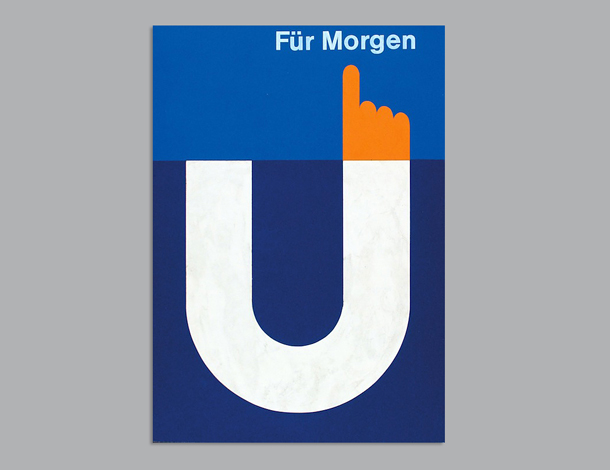
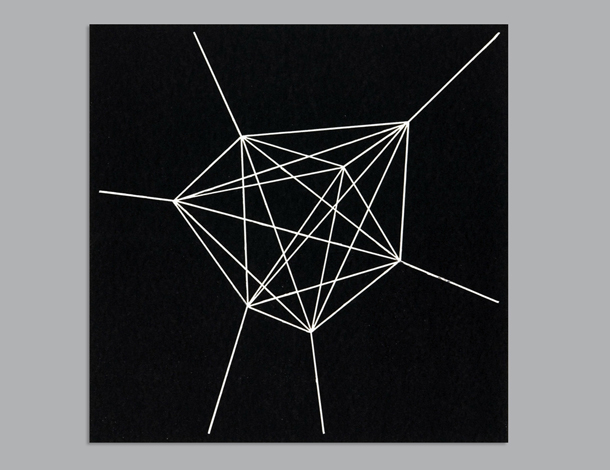
As designers we all have our favourite, writes Martin Maher, classic pieces of work whether created by more well known designers or by someone more obscure. One of my all-time favourites, that really has stood the test of time is the Deutsche Bank identity. Designed by German designer Anton Stankowski, it still looks as striking and timeless now as it did when it first appeared back in 1974.

Anton Stankowski was born in 1906, in Gelsenkirchen, Germany. Bizarrely he started his career by serving an apprenticeship as a church painter and decorator from 1921 to 1926. After this apprenticeship he studied graphic design, typography and photography at the Folkwang School in Essen with Max Burchartz. Between 1929 and 1934 Stankowski worked in Zurich for the renowned advertising agency of Max Dalang. It was here that he developed what became known as ‘constructive graphic art’. Whilst in Zurich he formed a cultural circle with friends that included Max Bill, Heiri Steiner, Richard Paul Lohse, Hans Coray and Herbert Matter amongst others. During these years Stankowski completed his famous ‘Theory of Design’ in which he worked out fundamental forms of design expression.
AntonAnton

After some time working back in Germany he joined the armed forces and became a prisoner of war until 1948. After returning he worked at the ‘Stuttgarter Illustrierte’ as editor, graphic designer and photographer. Then in 1951 he established his own design studio in Stuttgart with Willi Baumeister, Max Bense, Walter Cantz, Egon Eiermann and Mia Seeger. His design work for IBM, SE and his ‘functional graphic designs’ were said to be of an exceedingly high standard. Around this time he also taught in Ulm at the College of Design.

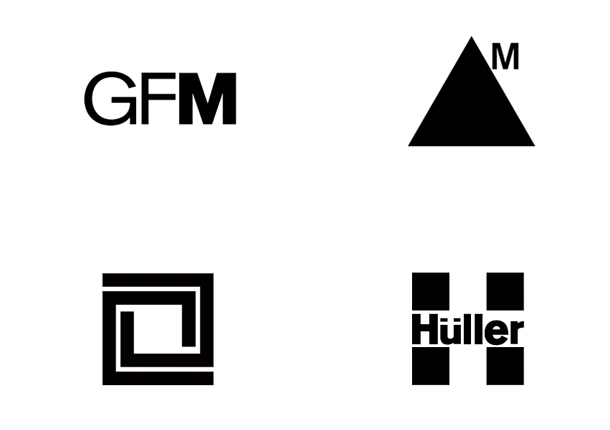
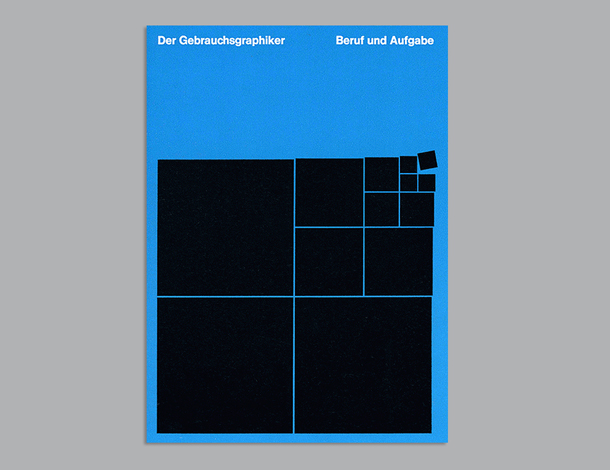
In 1955 Mercedes-Benz hired Stankowski to design posters for their entire racing series. He was the last artist to design posters for Mercedes independently. In fact, it was only by chance that he got to work for the car manufacturer at all. As Stankowski himself explained in an interview he gave in the 1990’s, the then-head of advertising at Mercedes lived just two houses down from him. During the 1960’s he created the now legendary ‘Berlin layout’ which was the city’s own visual identity. He also designed marks for IDUNA and VIESSMANN. From 1969 to1972 Stankowski was Chairman of the Committee for Visual Design for the Olympic Games in Munich.

AntonAntonAnton

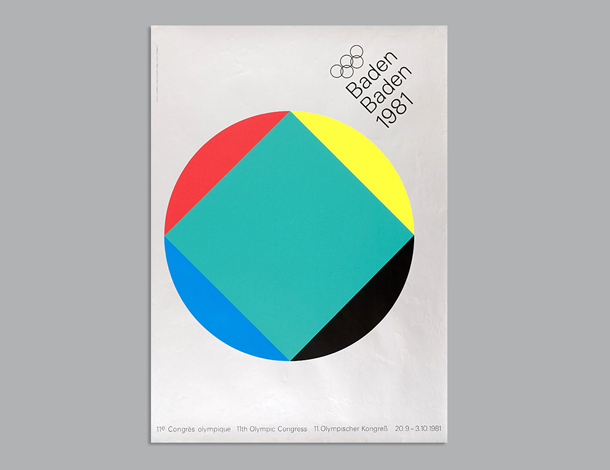
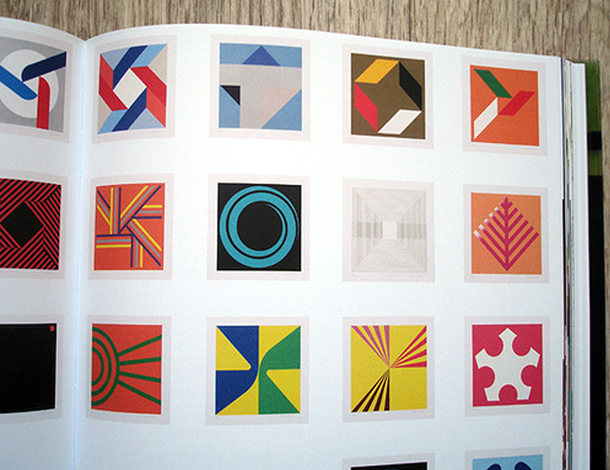
The 1970’s saw Stankowski create many famous identities including logos and marks for Deutsche Bank, Munich Re (Münchner Rückversicherungen), REWE, Viessmann, Iduna, SEL, Süddeutsche Rundfunk and the Olympic Congress Baden-Baden. For Stankowski there seemed to be no separation between his more art-inspired ideas and the applied art of his design work. Much of his functional design work incorporated elements of his photography and painting.


AntonAnton

He won many awards and honors including the Harry Graf Kessler Award. This was an honorary award from the German Artist Union, for his life’s work. Stankowski had a long, varied and highly interesting career that spanned more than five decades. In his later years he concentrated more on his painting, devoting himself to it completely until his death in 1998. His work still lives on, especially as many of his logos are still in use today by the big corporations that hired him back in the 1970’s and 80’s.

For more information on the man himself, visit the Stankowski Foundation’s website.
AntonAntonAntonAntonAnton

All images © The Stankowski Foundation

Motherbird {Melbourne}

Awesome agencies / LWC

I have to say, being in this here blogging business, I read a lot of agency ‘profiles’. Many baffle, some astonish and others are just fancy words strung together, however Motherbird seem to have nailed theirs. Not only do they sound interesting they also appear to understand the true function of graphic design. I’ll let you read their words for yourself but needless to say the 3 C’s are present, creative, communication and clients. Needless to say the beautifully scribed words follow suit to some breathtaking work – but our words couldn’t do it justice. See for yourself…

Tw @motherbird / www.motherbird.com.au

Matthew Dawson {London}

Illustrators

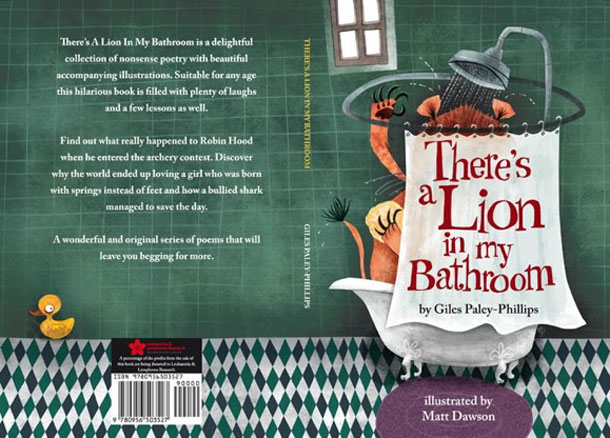
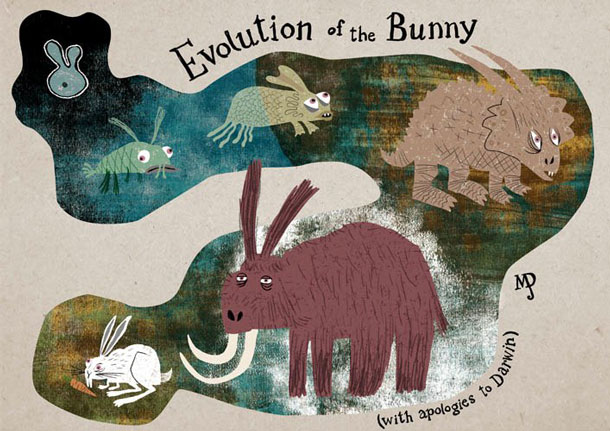
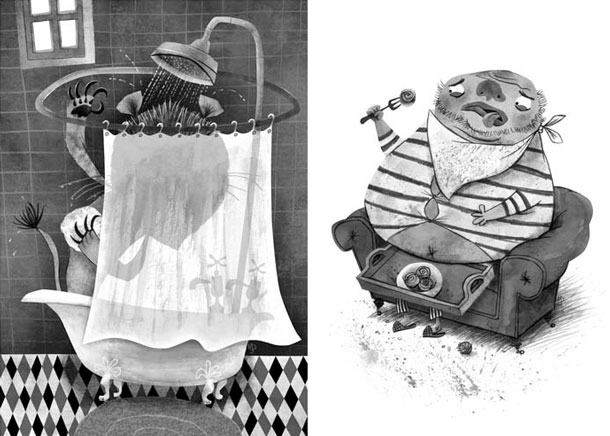
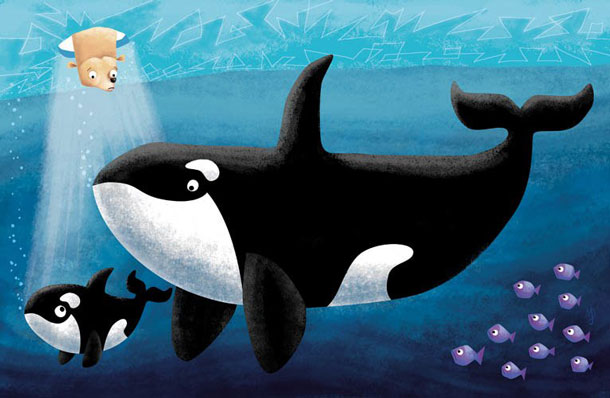
We’re such a big fan of the charming work by the hand of freelance illustrator Matt Dawson. His clients have included Penguin Books, Nickelodeon and Leapfrog and has just illustrated his first book for the kiddies “There’s a Lion in My Bathroom: Nonsense Poetry for Children”, authored by Giles Paley-Phillips for Rebel Books.

Handsomely put by the man himself; “Every project has it’s own special considerations but I generally find you cannot go far wrong if you aim to raise a smile and approach things from an unexpected angle.”

Tw. @MattDawsontwit

Matt DawsonMatt DawsonMatt DawsonMatt DawsonMatt DawsonMatt DawsonMatt DawsonMatt DawsonMatt DawsonMatt Dawson

Heroes – Morag Myerscough

Heroes

Looking back through our ‘design heroes‘ series so far it would be a fair to ask, where are all the female designers? Well this weeks profile will help to address this by focussing on the eclectic, colourful and sometimes eccentric work of the wonderful Morag Myerscough. Most well known for projects that integrate graphics and type within architectural environments, her award-winning work on wayfinding systems, exhibitions, installations and even schools has been well documented in design books and publications worldwide. In under two decades her small but prolific studio has created a varied, expansive and visually stunning body of work.

Morag was born in Holloway, North London in 1963 into what she has called a ‘bohemian’ household. Her mother was a textiles designer and her father was a classical musician who recorded movie soundtracks and even played on the Beatles ‘White Album’. At school Morag did well at art and went on to study at St. Martins in London. She followed this with two years at The Royal College of Art. After graduating in 1988 she worked for major agencies during the day and on freelance projects at night. After a stint with Lamb & Shirley and a year in Milan as head graphic designer for Michele De Lucchi’s studio, she founded Myerscough Chipchase with Jane Chipchase. This was in 1991 and was around the same time that other RCA graduates were forming companies such as Why Not Associates, Fuel and Graphic Thought Facility.

When Jane Chipchase left to work at Pentagram in 1993, Morag decided to set Studio Myerscough. The studio has grown and then sometimes downsized over the years, depending on the size and scope of each project. Morag currently has two design assistants, Vilma Jaruševičiūtė and May Mahoney who work alongside her at the 4000 sq ft East London gallery and studio space that she owns.

Morag seems to see no boundaries within the various disciplines that she works in, whether it’s architectural, art-based, product or experience design. One specific piece of work that has become synonymous with wayfinding is her collaborative and award-winning work on the Barbican Arts Centre. Morag was brought into the project at the very beginning and worked closely with architects AHMM as well as Cartlidge Levene who worked on the signage. Other equally well known schemes include her wayfinding and environmental graphics for Westminster Academy and Kentish Town Health Centre.

Morag’s work is influenced by a wide variety of movements and styles. She loves the energy and radical, free expression that design had back in the 1960’s. This anti-formalist, ‘anything goes’ attitude can be seen in many of her projects. On the eclecticism of her work she says: “Challenges keep my design fresh and I am always open to the unexpected. I never approach a job with any preconceptions. It is important to find the best way to work on a project, not be constrained by set formulas from the outset. I relish in productive collaborations and trust.” A fine example of this collaborative mindset can be seen in ‘Supergroup‘ a loose network of creatives that come together whenever a project requires their combined expertise.

Heroes – Tom Hingston

Heroes

Who’d have thought that a Neville Brody exhibition at the V&A could have changed the life of one designer so profoundly. But that’s exactly what happened to designer Tom Hingston writes Martin Maher. He initially studied at the London College of Printing before going onto Central St Martins. The Neville Brody connection didn’t end there either. Tom’s tutor Jon Wozencroft worked with Neville Brody and encouraged Tom to go along for an interview for a junior designer position at Neville’s studio. After a nerve-wracking interview with his hero he got the job and an amazing design career began.
Whilst working at Neville Brody’s studio Tom worked on everything from editorial work through to corporate identities, film titles and even the original Sony PlayStation. Neville encouraged his staff to experiment even if it meant them making mistakes and Tom learnt a great deal whilst there. After a couple of years Tom received many requests from friends needing design work for projects they were setting up. He designed flyers and posters for The Blue Note which was home to Talvin Singh and James Lavelle’s club nights. The workload increased and he finally decided to take the plunge and go freelance.

Although like any designer starting out on his own he struggled with all the usual problems at first but he eventually found his feet. It helped that one of his first high-profile clients was Massive Attack. His first of many projects with them was their third album ‘Mezzanine’. Tom worked closely with band member 3D, himself a visual artist who had co-designed all the band’s previous artwork. The third artist in the mix was renowned photographer Nick Knight who Tom has formed a formidable creative partnership with throughout the years.

Based in London, Tom Hingston Studio is now six full-time members who work across a wide variety of projects that range from music, fashion, film, advertising, branding as well as publishing. The studio is now well known for it’s thoughtful and highly innovative approach to creative work and the studio has won many awards for it’s design and art direction. As well as its music industry work it also counts among its clients Absolut, Alexander McQueen, Christian Dior, Mandarina Duck, Nike, Nokia, and Levi’s.

Tom HingstonTom HingstonTom Hingston

Tom Hingston has come a long way since that life-changing exhibition at the V&A. His company has already created quite a remarkable body of work and one can only imagine the amazing work they will produce in the future. Who knows what direction this will take but I for one will be keeping a curious eye on their beautifully designed website for any updates.

Tom HingstonTom HingstonTom Hingston