Moving Brands mark a new era in Story Telling

News

With the never ending debates over whether ‘print is dead’ you could argue that with this latest project from Moving Brands that the final nail has been hammered into the coffin.

Madefire is a ‘Motion Book’ recently launched for tablet devices that takes the world of Graphic Novels and turns it on its head. Founded by and featuring some of the work of Ben Wolstenholme (founder of Moving Brands), Liam Sharp and Eugene Walden this ‘motion book’ pushes at the boundaries of the tablets its housed on and simply enhances all aspects of the lovingly created adventures it features. Through clever use of sound effects, music and animation the Graphic Novels come more alive onscreen however, the experience still maintains true to the art form and more importantly the actual printed comics themselves.

Crafted by the team at Moving Brands, the Madefire brand has a very bold presence calling out to its audience to ‘start something’. The mark itself pays homage to the comic book history but its the distinctive visual language that instantly making it feel like its already been part of the establishment. A clever transition from the Moving Brands own logo (whether conscious or not) the Madefire marks sharp points and use of cirlces creating both the ‘M’ mark and a nod to the traditional comic book with its book-like form. Staying with the tradition, you will be please to hear that Madefire haven’t turned their back totally on the printed and have produced a number of carefully tailored pieces to extend the brand out to their audience.

‘Today everyone had the power to tell a story to the world’ as stated in the brands Narrative, and it’s this quality that breaths life into the brand itself by empowering its audience to become the creators moreover, a call to arms for a new generation of the genre. If extra authenticity was at all needed the Madefire App launches with both writers and artists of high note such as Dave Gibbons, famous for drawing Watchmen.

Take a look for yourself over at the Moving Brands site or why not even download the Madefire App… well it is free!

3 Deep Design {Melbourne}

Awesome agencies / LWC

3 Deep Design are a sophisticated bunch and rightly so. They openly admit that creativity is no longer enough in a such a rapidly changing world of communication and that it’s time to delve deeper. Their strategic approach must be paying off because there are some beautifully executed pieces of work emerging from that Melbourne studio of theirs. Kudos to a good bunch managing to tick both boxes.

Tw @3DeepDesign / www.3deep.com.au


Heroes – Storm Thorgerson

Heroes

When it comes to the history of album cover design there is one company that always seems to come up in conversation, Hipgnosis, writes Martin Maher in this week’s Masters Monday. One of it’s co-founders was Storm Thorgerson, a designer who still designs album sleeves to this day. But it’s his work from the 70’s and 80’s that probably holds the most interest to anyone with even a passing interest in music industry design and in popular culture in general. After all, Hipgnosis designed some of the most well recognised and iconic album sleeves in the history of rock and roll.

Storm Thorgerson was born in 1944 in Potters Bar, Middlesex. He attended Summerhill free school and then Brunswick primary in Cambridge. He then completed a BA Hons in English and Philosophy at Leicester University followed by a MA in film and TV from the Royal College of Art in London where he graduated in 1969.

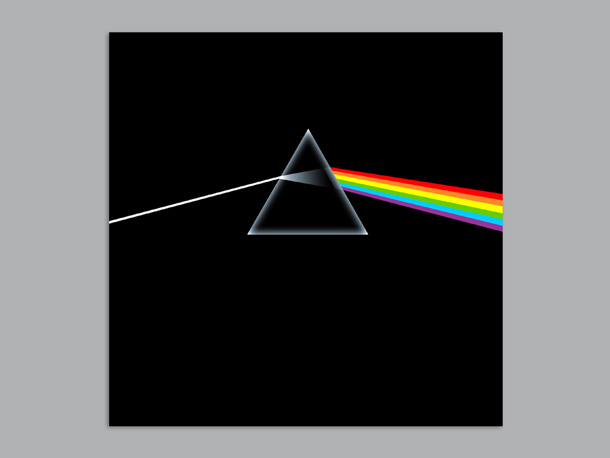
Originally Storm wanted to become a filmmaker but an invitation from some old school pals (Syd Barrett and Roger Waters of Pink Floyd no less) to design an album cover for ‘Saucerful of Secrets’ changed this. Then in 1970 he was asked to design the cover for Pink Floyd’s ‘Atom Heart Mother’. He had recently formed Hipgnosis with friend Aubrey Powell and for their first sleeve they proposed an image of a cow looking back at the camera whilst stood in a vivid green field, with a bright blue sky. The execs at EMI hated the cover but Pink Floyd loved it and the start of a very creative relationship began. Storm was once even described as the sixth member of Pink Floyd. Three years later, in 1973 they designed the famous prism cover for ‘Dark Side of the Moon’ and started to really make a name for themselves in the world of music industry design.

StormStormStorm

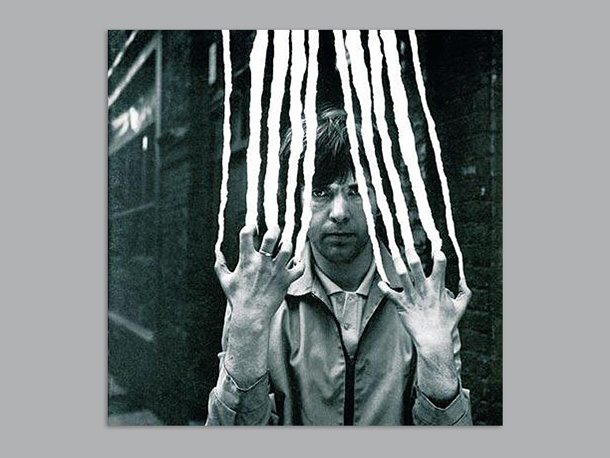
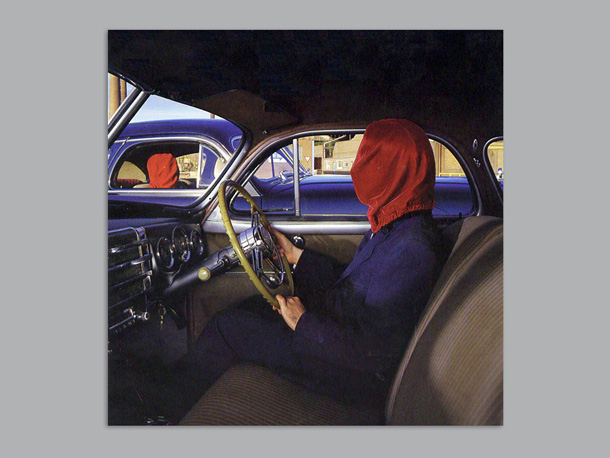
Photographer Peter Christopherson joined Hipgnosis in 1974 and this added another dimension to their work. Their work throughout this time was heavily influenced by surrealism and psychedelia and they used collage and photomontage alongside overt sexual imagery and innuendo to amuse as well as shock the record buying public of the time. From those early, experimental days with Pink Floyd, Thorgerson has worked with an amazing array of musicians and bands that include Led Zeppelin, Black Sabbath, Genesis, Peter Gabriel, 10cc and more recently Dream Theater, The Cranberries, The Mars Volta, Muse and Biffy Clyro.

Storm-Peter-GabrieMars-VoltaLed ZeppelinBiffyAudioslave

Perhaps the most amazing thing about his work is the almost complete lack of computer enhancement to the real photographs used. Most of the artwork is real and what you see was actually shot that way. The man on the cover of Led Zeppelin’s ‘Wish You Were Here’ was actually on fire. 765 wrought iron beds were individually arranged and carefully spaced on a beach for Pink Floyd’s ‘Momentary Lapse of reason’ cover. Huge models, props and sets were (and still are) made by hand and placed in various landscapes and photographed as they are. Storm is always willing to strain, sweat and indeed fight for what he feels is the perfect location, weather and overall effect for the image he is striving to create.

A quote of Storm’s typically sums up his thoughts: “I like photography because it is a reality medium, unlike drawing which is unreal. I like to mess with reality… to bend reality. Some of my works beg the question of is it real or not?

Hipgnosis also designed the advertising and promotional material for a wide range of clients within the music industry and this also included directing music videos, films and commercials. Hipgnosis apparently didn’t have a set fee for designing an album cover. Instead they asked the artists to “pay what they thought it was worth”, a policy that only occasionally backfired. Storm left Hipgnosis to go solo in the late 80’s and he continues to design for the music industry as StormStudios even though he is now in his late sixties. His imagination seems to know no bounds and his dedication to his art as well as his original thinking set him way apart from any peers he may have once had.


Studio Alexander {Auckland}

Awesome agencies / LWC

Studio Alexander are the business, the design business that is. Pretty well thought of on this side of the globe, the Auckland based agency have a proven track record for successfully driving business forward through creativity – bridging that gap beautifully. Not only are they doing a sterling job educating business around the value of design but they are managing to stock their awards cabinet at the same time. And as if this wasn’t time consuming enough, creative leader Sam Trustrum also finds time to co-found the odd magazine here and there, namely up and coming New Zealand based publication Studio Magazine profiling creative spaces.

Tw @studioalexander / www.studioalexander.com

Heroes – Robert Brownjohn

Heroes

There aren’t that many characters in the history of graphic design that could be compared to rock ‘n’ roll stars, says Martin Maher in this weeks installment of Masters Monday. Sure there have been the likes of David Carson, Peter Saville and Stefan Sagmeister but these chaps pale in comparison to one Mr Robert Brownjohn, a man so cool even the Rolling Stones wanted to hang with him. He lived fast and he died young but what he achieved in the middle has become the stuff of legend. In design circles at least.

Brownjohn, known throughout his adult life as simply BJ, was born in 1925 to British parents in New Jersey. He showed early artistic promise and in 1944 earned himself a place at the Institute of Design in Chicago, formerly known as the New Bauhaus by famed founder László Moholy-Nagy. Brownjohn became a protégé of Moholy-Nagy and a great deal of the formative qualities in his work can be traced back to this important influence.

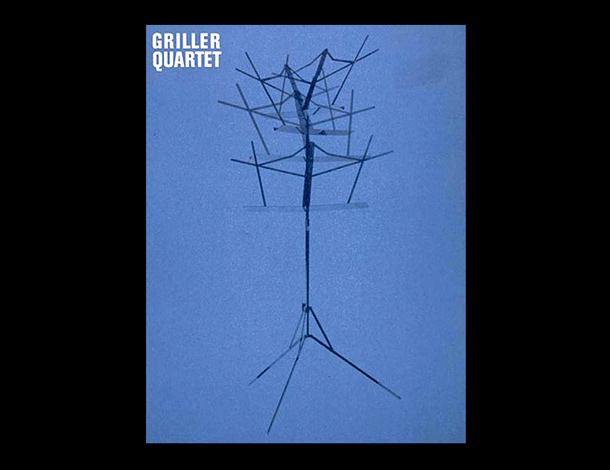
In 1950 Brownjohn moved to New York to pursue his graphic design career. Whilst working as a freelancer he completed projects for a many clients including Columbia Records. Brownjohn’s unrestrained personality and his love of jazz allowed him friendships with giants of the genre such as Miles Davis and Charlie ‘Bird’ Parker. He became a regular within the social scene of the city and he also became a heroin addict during this period, like many of the stars he mingled with.

brownjohnbrownjohn

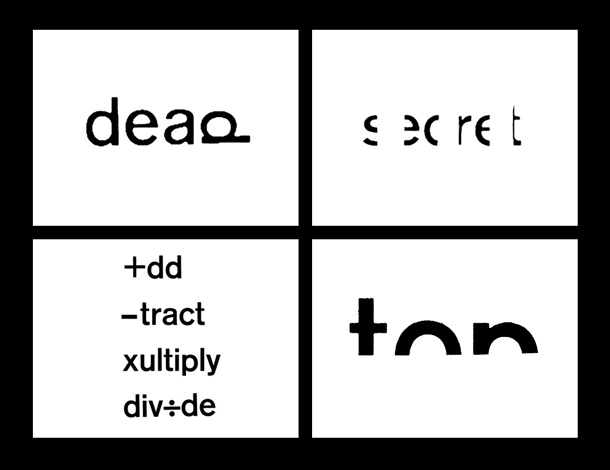
In 1957 Brownjohn opened Brownjohn, Chermayeff & Geismar with Ivan Chermayeff and Tom Geismar, in New York City. They designed print projects initially, producing many experiments in type design as well as taking on some paying, commercial projects including work for the Pepsi-Cola Company. Amongst the experimental work was the book ‘Watching Words Move’. His wry, typographic experiments were highly original and often humourous. Humour and sex were two subjects that repeatedly showed up in Brownjohn’s design and moving image work.

brownjohnbrownjohn

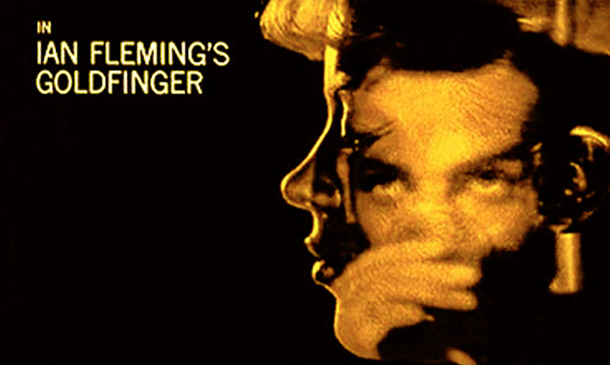
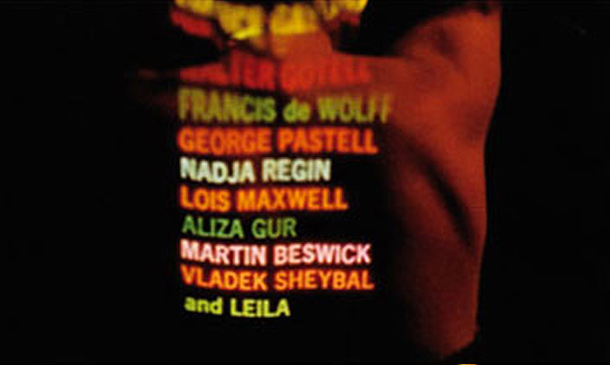
In 1959 Brownjohn left Chermayeff & Geismar and moved to London to become the design director for McCann-Erickson Ltd. Whilst there he designed the title sequences for many films, including the Bond films ‘Goldfinger‘ and ‘From Russia with Love‘. In these titles Brownjohn projected moving footage onto the bodies of models and filmed the results. This technique of filming projections was taken from the Bauhaus and was also used by László Maholy-Nagy in his early constructivist films during the 1920’s. Brownjohn’s most well-known work from his post-Bond career is probably the cover for the 1969 Rolling Stones album ‘Let It Bleed’. He also created moving graphics for Pirelli and the Midland Bank between 1966 and 1970. He later returned to New York to teach at the Pratt Institute and the Cooper Union.

brownjohn brownjohnbrownjohn

He never did conquer his heroin addiction and it was one of the contributors to his unfortunate and premature death in 1970, aged just 44. His passing was untimely but in some ways expected and although his career lasted less than 25 years he created more signature work than many designers who worked for twice as long. Brownjohn was larger than life, a rascal, a brazen braggadocio but his impact on the design scene of the twentieth century was, without doubt, that of a creative genius.

brownjohnbrownjohn

James Kape {Sydney}

LWC / Outstanding individuals

James Kape is a New York based designer so a slight cheat this week but the boy does hail from Sydney, Australia. He focuses primarily on branding, print and web design. James is inspired by refined design, typography and photography. He approaches each project with interest and enthusiasm, always striving to create something both visually effective and appropriate for its intended audience. A perfect candidate to join our troop of outstanding individuals me thinks.

www.jameskape.com

Heroes – Armin Hofmann

Heroes

It’s Monday, it only means one thing; and what an icon Martin Maher prolifes on this week’s Masters Monday… Armin Hofmann.

Hofmann has been described as one of the most outstanding personalities in Swiss graphic design history. Along with the more well known Josef Müller Brockmann, Emil Ruder and Max Bill, Hofmann helped shape modernist-inspired graphic design beyond recognition. Without ‘The International Typographic Style’, also known as the Swiss Style of design, contemporary graphic design would be almost unrecognisable. The readability and cleanliness of the style as well as its asymmetric layouts, use of a grids and sans-serif typefaces have helped define how we design today. Designers today are still taking the best elements from this era of design to create a whole new contemporary, visual aesthetic.

Armin HofmannArmin Hofmann

Hofmann was born in Winterthur, Switzerland, in 1920. He studied at the School of Arts and Crafts in Zurich, then worked as a lithographer in Basel and Bern. He then went on to open his own studio in Basel. In 1947 he began teaching at the Basel School of Arts and Crafts after he met Emil Ruder on a train and learned that the school was looking for a new teacher. Hofmann remained there for 40 years and eventually replaced Emil Ruder as the head of the school.

Armin Hofmann

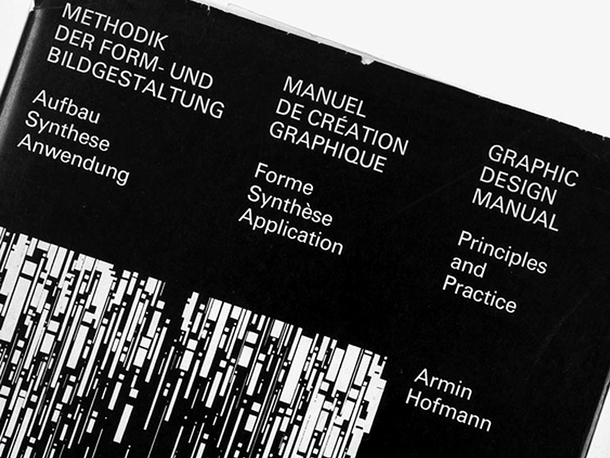
Hofmann felt that one of the best and most efficient forms of communication was the poster and he spent much of his career designing posters, in particular for the Basel Stadt Theater. Just as Joseph Müller-Brockmann and Emil Ruder had done previously, Hofmann also wrote a book outlining his practices and philosophies. His ‘Graphic Design Manual’ was, and still is, an excellent reference book for graphic designers.

Armin HofmannArmin HofmannArmin Hofmann

The style of design that Hofmann and Ruder created aspired to communication above all else. It showed new techniques of photo-montage, photo-typesetting, experimental composition in general and of course heavily favoured sans-serif typography. It could be said that Hofmann devoted his entire professional life to bringing a creative and artistic integrity to the world of graphic design.

“As a human being he is simple and unassuming. As a teacher, he has few equals. As a practitioner, he ranks among the best” “…He is a rare bird, a daredevil driver, a mountain climber, a teacher par excellence, and a guru. Yet it is difficult, really, to pin him down.”– Paul Rand of Hofmann

Hofmann’s work, especially his poster designs, always seemed to emphasize an economical and efficient use of colour and typefaces. This was in reaction to what Hofmann called the “trivialization of colour.” His posters have been exhibited as works of art in major galleries all around the world, including the New York Museum of Modern Art. He retired in 1987 but his legacy lives on in his hugely influential body of work.

Armin Hofmann

BRR {Auckland}

Awesome agencies / LWC

This is a very special post to accompany a special week. As of next Tuesday I will be taking up a new full time gig at a fancy new agency and throwing myself head first into a barrel of branding and niche packaging goodness. The agency of choice is BRR, in my current home town of Auckland, New Zealand.

With a strong focus on brand story and solid thinking, I might be biased, but they are producing some pretty nifty work. Below is a showcase of their strategically led creative treats to date, hopefully their will be a few more in the near future courtesy of yours truly. Check out their blog too for some interesting design insights.

Tw @BRR_NZ / www.brrltd.com / Blog