Parallax goes Jotto

News

Infographics and Japanese rice wine don’t often go hand in hand, in fact this may be a virgin pairing – courtesy of Parallax Design over in Adelaide. After being knocked sideways by their wonderous branding work (featured here earlier in the year) we were tickled pink when this little gem landed in our lap. Enter Joto, Sake for the contemporary North American market.

Joto is one of those lovely category shakers we all crave as designers – with a western market on the cards it was time to reinvent sake. While it may appear on face value as if all tradition and heritage has been striped from the product, we know better. Chatting with the guys at Parallax we dug deeper into their method and unravelled the design choices that led to the creation of Joto.

For us the beauty is in the subtle nods to Japanese culture, little discoveries waiting to be noticed. For example the setting of the letterforms, Joto is broken down into two symmetrical syllables and set vertically as per Japanese writing systems. Add to this the visual cues of the traditional sake bowl and a geometric design philosophy and you have yourself a brandmark worthy of its product – bold, memorable and relavent.

However I think my highlight is the more surprising element – the use of infographics. When asked to visually represent more of the story behind the sake this was Parallax’s answer. And why not –  if you’re going to shake up a category you might as  blow it’s socks off.

www.parallaxdesign.com.au

Apples for the Kiwis

News

They may be small and tucked away down there in the depths of the Southern Hemisphere but New Zealand does in fact have a thriving creative community and an exciting design scene, as regularly demonstrated through the recent LWC Friday posts. Unfortunately, it’s not large enough to warrant an all singing, all dancing Apple store – not quite the same foot traffic as Regent Street. Enter Yoobee, the Kiwi’s gateway to the wonderous world of Apple.

Yoobee is the primary authorised Apple dealer is New Zealand, a creative hub that brings together tools, training, knowledge and inspiration in one accessible place. The design identity, created by BRR, was inspired by the brand essence and communication line ‘Who Will YOOBEE?’

The logo uses the ‘U’ form to create all of its characters, speaking directly to the aspiring creatives. The identity system employs icons and colour to differentiate and identify eight individual creative tribes. It is enhanced with a tone of voice that communicates directly to these creative tribes simply and confidently. Talking to the individual rather than the masses, championing the creative process and outcome, as opposed to focusing on software specs and functions.

www.brrltd.com / @BRR_NZ


Is size everything?

Jottings

I was at a design lecture recently by David Kester of the Design Council of which the focus was the need for small businesses to engage with design – incidentally a great lecture by the way. This learning was swiftly followed by a question to the audience around what the industry is doing to make design affordable to these companies. An answer wasn’t offered just an affirmation of the need. So what can we do? And how do we do it without devaluing our industry?

I don’t have the answer it has to be said, however I do strongly support the need. These companies form the future of our economy especially over here in New Zealand. Julian Smith of BRR has worked in this market (both client and agency side) for over 12 years and echoes this, “SMEs make up the backbone of New Zealand’s economy and have played a significant role in standing up in tough economic times”.

From a designer’s perspective SMEs have the potential to be dream clients, often with a blank or highly flexible canvas, however there are two problems. Firstly its a struggle to make the numbers add up, working for these clients wont pay the bills for long. Add to this the time and dedication often needed to educate the client around the benefit of design and we often find ourselves fighting a losing battle from a financial perspective.

Enter The Design Council and here in New Zealand, Better by Design. Initiatives like these are a massive leap in the right direction however their work is a drop in the ocean, there are only so many Government grants after all. There is also a question around whether we are tackling the problem at its core.

Design is fast becoming more and more accessible with one stop logo shops and crowd sourcing not to mention the DIY mentality. These days anyone and everyone is a designer including your Aunty Joan whose neighbour gave her a copy of Photoshop 2. Add to this the growing recession based trend of the ‘one man band designer’, a growing occurrence here in New Zealand, and agencies are having to work harder and harder to justify their price tags.

The problem is clear, our pricing model plots price directly against time applied with designers charged out by the hour. How do we reduce this when a designer approaches each project in a similar way with a similar process regardless of the size or budget. The same stages of creative exploration apply across the board so how do we reduce the cost without reducing the time spent and consequently the quality of the creative output? Is it time we took a step back, identified our unique assets and analysed out process with a view to packaging an affordable offering with effieciency at its heart or should the focus be on educating the client around the value of design? The choice is ours.


Profiles – Nick Finney {NB Studio}

Profiles

Being one half of an outstanding brand and communications studio is one thing, but doing it with a smile and use of wit is truly a feet in itself. Originality of thought and style has been the hallmarks of Nick Finney as he made his way from Pentagram to setting up the award winning studio NB. With seemingly effortless ease Nick manages to execute the simplistic of solutions to briefs that would have other designers running scared and all with humility and wit.

Talking electric pencil sharpeners and the ability to step back and think, it is a real pleasure for me to introduce Mr Nick Finney.

DJ: Going back to the start, how did you get in to the world of design?
I was pushed. I was at college and on a foundation course struggling with an art project. The tutor told me my work was ‘too tight’ and that I would make a great designer. Sadly, I believed him.

DJ: Who or what has been the biggest influence on your career / best piece of advice you’ve been given?
I wish I could answer this succinctly but I don’t honestly think there is one person or event. People have come and gone with nuggets that I have been taught, or more often gleaned throughout my career. The most exciting thing is the realisation that you never stop learning or being influenced by the people you meet.

DJ: What keeps inspiring you after all your years in the industry?
Having a family at home and at work. Alan Dye and the other spectacular people I work with at NB.

DJ: As one of your earliest inspirations… are you still a member of the ‘Puffin Book Club’ or collect any other 70’s children books/magazines?
No, I’m afraid not. I still have some old ones, and every now and again I have a quick look on eBay for bits and pieces. I think I may join for my children. I don’t have the collector’s obsession, compulsion, the urge to complete, to have every version or iteration. I do have some great books, posters, albums which have, by dint of time or by accident, become valuable, but I don’t have the attention span to focus on any one genre, category, stream or subject.

DJ: What has been the most rewarding project you have worked on?
I’m quite proud of the latest annual review for British Heart Foundation as it was a great solution to a tight brief and it built on the previous years concept we produced with them. Rewarding because it took a great deal of effort to create and source materials for. For a good cause and an appreciative client.

DJ: How important are ‘non-client’ projects to your work and mindset?
Very. Although finding time to do non-client work is difficult so we generally create a brief for ourselves around self-promotion. Most enjoyable recently has been ‘Why Us?’, a collaboration between NB and some great friends: super-talented animator Johnny Kelly, the unique genius that is illustrator James Graham, and brand guru and all-round sage Michael Wolff.

DJ: How would you describe the culture within the corridors of NB, and the influence it has on the outcome of your work?
We don’t have corridors, rooms or doors to shut – we’re open plan and open-minded. We’re relatively small. There’s 10 or 12 of us depending on interns and freelancers. We’re hard-working and collaborative. We try to have fun while we work and we allow our team freedom to experiment and to play as much as we can as that’s what life is all about.

Alan and I try to avoid a ‘them and us’ culture as much as we can with our team, we try to respect all ideas and individuals on an equal basis. Whether it works is something you’d have to ask the team; but we feel that we’re generally quite nice people to work with.

We have ideas and working processes that we’ve put in place over the years which help us ensure the client gets the most effective solutions we can give them. I doubt that these processes are unique to us but they help us navigate. We thrive on intuition routed in rigour.

DJ: With Communications, Collaborations and Coffee describing the essence of NB, do you have a biscuit of choice to accompany your beverages?
Not really. We work next to Borough Market, a foodie heaven in Southwark, South London. There’s a relentless selection of artisan cakes, biscuits and snacks available to go with any occasion. We get weekly boxes of fruit delivered to the studio to try and counter the unhealthy stuff.

DJ: NB Studio has a reputation for wit and clarity of communication. Was this introduction of wit into your work forged out of all the late nights you had a Pentagram?
We didn’t work late at Pentagram (just kidding). Yes, I guess we learnt a hell of a lot and we owe a great deal to our time at Pentagram, to our bosses and the people we worked alongside. But we have moved on, and it’s great for us to be able to choose to work with our own friends, our own clients and experts, to take our own path down life’s road.

DJ: It seems that there is a natural migration for designers who work at Pentagram to form agencies together. Did you feel this while you where there or was it just a natural migration?
It sounds pretentious, but once I’d worked at a design company with such a great reputation, and rubbed shoulders with such talented designers, I felt there was nowhere else I wanted to go or could go. I couldn’t imagine taking a job in any other place and enjoying it. So, there nothing else to do but form my own design company with my friends.

DJ: What was your leaving gift from Pentagram and where is it today?
Ha! Who have you been talking to? John Rushworth bought me an electric pencil sharpener, which at the time, I failed to see the significance of (I wanted a pony). I don’t know where it is. I left it behind when moving out of an architect’s studio we used to share. So, Arthur Collin may have it? He lives in Sydney.

DJ: How do you instil the NB Studio culture in to younger designers that come in?
We try and spend as much time with them as we can. We try to explain the ‘whys?’ to understand the client needs and the business case. And to help them to challenge a brief if they don’t get what they need from it. We endeavour to give them as much input as they need whilst letting them develop as designers and discover for themselves. We drop them in at the deep end and watch them swim beautifully. There’s not much treading water here, there’s no time.

At the end of a long week we have something called ‘Chantelle’ on a Friday afternoon (originally named Show’n’Tell). It’s an excuse to sit down with a glass of wine/beer and catch-up. What’s everyone working on / is there a spotlight project people want to canvas opinion on? Often to brief a new exciting studio-wide brief or listen to an talk on a totally unrelated subject that someone is keen to give. This Friday we have client friends coming over for a quiz and nibbles. It’s always fun and it’s a nice way of getting together without the pressures of phone calls, e-mails, meetings, presentations, work and the usual studio day-to-day.

DJ: How do you see the next generations? Do you encounter young designers all driven by stardom and not on the craft itself?
Future generations of designers are getting better and better, adapting to new technologies, new techniques, new challenges and they’re able to cope with the seemingly frantic speed at which things progress. The ability to step back and think is what we look for at NB.

We don’t have time for stardom or big egos, we need designers who can work as part of a team. I’m constantly impressed by the interns we get through the studio; at the levels of talent.

Alan and I find it impossible to see everyone who gets in touch with us, so our designers interview and vet the interns, after all, they will potentially be working closely with them. They do an amazing job (Thank you Chelsea Palmer). We’ve had the most talented, hard-working, team players and I find it hard not to be able to employ them all at the end of their internship.

DJ: What do you value the most from what you do?
That I work in such a creative atmosphere surrounded by talented and inspiring individuals.

DJ: Is there any project or any piece of design that you would really love to tackle, something you have not managed so far in your work?
Something highly visible.
Something that makes a difference.

DJ: What’s a typical day in the life of Nick Finney?
I’m afraid to admit it’s rather unstructured and the patterns will alter depending on what needs my attention from one day to the next. Some days I can spend hours at my desk. Reading, writing, reading, responding, thinking – I’ll sometimes don headphones as a ‘do not disturb’ notice – this trick rarely works. On other days I can be much more hands on with the designers, running through briefs, putting presentations together, sitting down together to chew-over ideas and drill down to ‘the one’. Other days, client meetings can mean that I’m out of the office for most of the day, and that feels productive and unproductive in equal measure. Then home, dinner and if there’s still time, read with the kids.

DJ: If you retired today, what project or piece of work, big or small, would be your legacy?
I’d like it to be a client project. But it’s not… it’s the self-promotional collaborations, the ‘This Year’ cards, the ‘Why Us? animation.

DJ: What has been the soundtrack to your life?
It’s not over yet, but;

Today it would be: The Mountain – Heartless Bastards
Yesterday it was: Once in a Lifetime – Talking Heads
Last Thursday it was: Logic’s American Household (front hug mix) – Her Space Holiday

DJ: And finally… How do you kick back, away from design?
Hanging out with Sarah and the kids.
Playing guitar.
Cake and fine wine*

*this is not true.

Follow NB Studio on Twitter @NBStudio

Twenty Years of Design by Famous VS

News

Think back to 1992, the world of graphic design was a very different place. For me it was more about making my mum birthday cards and pictures of our family to stick on the fridge. For the world, graphic communication was still dominated by print. The internet was in it’s infancy and smart phones were a mere daydream. Branding was king!

The AGDA  (The Australian Graphic Design Association for the Brits) is the peak national organisation for professional graphic designers. It was founded in 1988 to facilitate the advancement of the graphic design profession in Australia. The year 1992 saw AGDA launch it’s awards competition which has since continued as a biennial affair.

2012 sees the twenty year anniversary of the initiative, a milestone inspiring the organisation to host a retrospective of the last two decades. A celebration of the work and previous winners generated over a time of huge change for the industry.

In their own words, “It seemed appropriate in this space to transform our awards programme, from an event about winners, to a review that celebrates the creative process, innovative thinking, the people and clients that make the work happen. The Australian Design Biennale has been developed to help the community discover the difference between everyday communication and quality creative communication. Review, dream, transform, be happy!”

Famous VS curated the exhibition and designed the printed material including an A5 book that does a grand job of not only showcasing the work but the creative process along with slices of the past and present. The book flirts with uncoated, coated, coloured and raw papers not to mention mono, full colour and special!  And if you are wondering where the glass mountains come in, you know those yellow pencils we all aspire to, well the AGDA have the Pinnacle Awards, affectionately known in the industry as glass mountains!

If you live on the wrong side of the world and can’t make the exhibition the website is an excellent way to soak up twenty years of creativity. Or treat yourself to the book here.

www.famousvs.com

Right on POINT, May 2013

Events / News

The launch of London’s new international design event has been announced, POINT Conference, all set for May 2013 and celebrating excellence in design and its influence on contemporary culture and society. With the theme set to be Authenticity, over two days, with 40 lectures, screenings and performances exploring the power and value of great design, investigating topics as design for society, investing in design and brave design that has the power to change the rules.

Over two days POINT will provide access to some of the most exciting thinkers, creators and innovators from the world of design – with contributions drawn from branding, communications, film, graphics, information, technology and user experience, together with strategists, writers, journalists, business leaders, musicians, artists, architects and photographers

An impressive list of speakers currently includes; Nicolas Roope – founder of Antirom and Poke, Edward Barber and Jay Osgerby – founders of Barber Osgerby and designers of the Olympic Torch, Andy Altmann – founder of Why Not Associates, sculptor Gordon YoungLucienne Roberts – founder of Sans+Baum and LucienneRoberts+, type legend Erik Spiekermann and a special film contribution from no less legendary Milton Glaser.

POINT London will feature lectures and contributions from design legends to innovators, and will be chaired and moderated by a team of design commentators and practitioners including Henrietta Thompson, Patrick Burgoyne, Matt Judge, Patrick Baglee and Conference Director, Robin Richmond.

Tim Fendley, POINT Conference director says; “The motivation behind the event is to put something back into the industry and to spread the word about the value and power of design. We’ll explore design’s potential making these issues more widely recognised and understood by designers and clients alike.”

Fellow POINT Conference Director Robin Richmond added: “Last year we brought the Typo Conference to London for the first time, we had great support, learnt a lot in the process and thanks to the feedback of delegates and Creative Review readers we have been able to refine our approach for the creation of POINT.”

Founded by designers Georgia Fendley, Robin Richmond and Tim Fendley without a commercial agenda and privately funded, POINT remains independent and impartial, enabling a challenge to the status quo and inspiring the highest standards in quality, while aiming to ensure the event is accessible to as many as possible.

To reserve your tickets for POINT London 2013 just register your interest on: www.pointconference.com
Tw. @POINTLondon / Fb. PointConference

iheartny

iheartny by Milton Glaser

Spiekermann

Spiekermann

Roope & Lucienne

Roope & Lucienne

Profiles – John Lloyd

Profiles

There are few bona fide heroes in this world. Ones that genuinely inspire and continue to do so and who’s experience and accomplishments give them an unquestionable sovereignty of voice within their realm. And it’s not just that – they belong to a unique club characterised as the original trail blazers, the ones who set the precedent and the ones who shaped the industry – and the landscape – by playing their part in defining it.

One such person is John Lloyd who, as the front page of his remarkable online archive will tell you “…there are lots of John Lloyds on the web. I am the graphic designer who co-founded the international design consultancy, Lloyd Northover.” Quite a remarkable statement to lay claim to; the essence of which is humble, elegant, both perfectly encapsulating the soul of the not insignificant work of the man it seeks to introduce, yet still belying the substance of it.

I have a few heroes, each for unique reasons and I’m discovering new ones all the time (that’s why we started DJ after all), but a career spanning 50 years, numerous accolades, achievements, awards and work that has both endured and defined, quantify John Lloyd, who, in 1975 co-founded Lloyd Northover with former classmate Jim Northover (pictured right), as a design hero with true pedigree. We were lucky enough to chat with him…

John and Jim Northover

DJ: You’ve designed some incredibly enduring identities during your career, of all, could you single out one that you still find particularly satisfying on the eye?
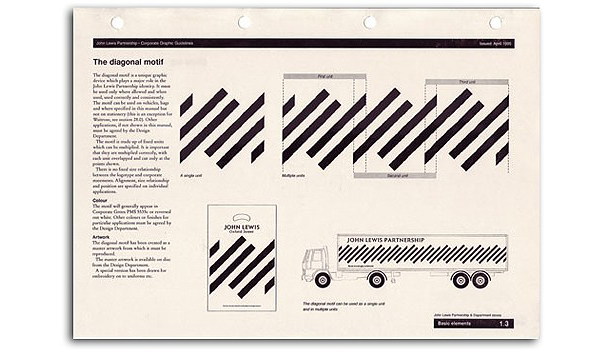
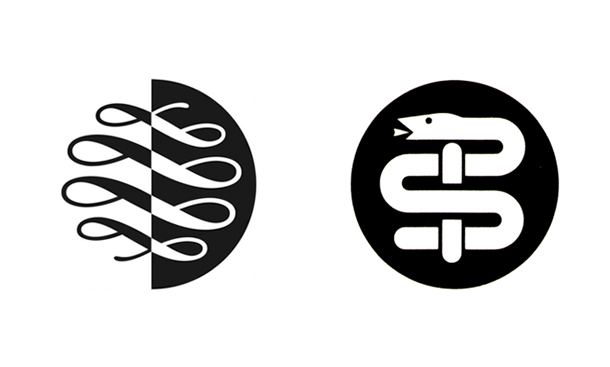
I think the symbol we created in 1986 for BAA (British Airports) is the most visually satisfying. I still like it for its utter simplicity. The three unadorned triangles constitute a symbol that immediately evokes airport activities and aviation but is clearly not an airline brand. The flexible identity system we created for the British department store chain, John Lewis, also pleases me. If you look closely, you will see that the diagonal pattern is not simply a series of diagonal lines but consists of a carefully designed module that can be repeated to create a mark of any length or size for use on the smallest ticket to the largest truck side.

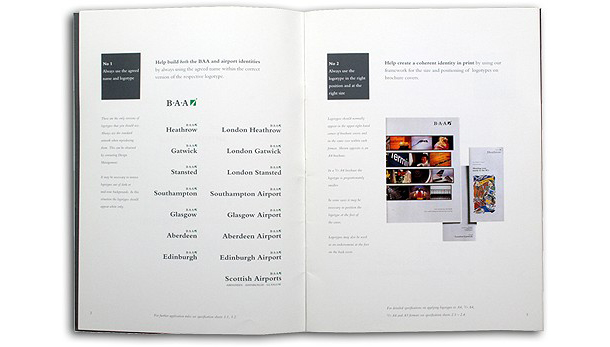
BAABAAJohn Lewis

DJ: In your formative years, did you have a mentor and did you receive any advice that particularly stuck with you?
I’ve had a few mentors. When I was an apprentice artist in the printing industry, I worked under a master called Ranald Woodward, who taught me diligence and attention to detail. As a student at the London College of Printing I learned not to have preconceptions and to use chance and random techniques to liberate creativity. I remember that one of my tutors, Eph Cowan, often urged me not to rest on my laurels, and I’ve tried to act accordingly. James Pilditch was one of the founders of Allied International Designers where I worked before setting up Lloyd Northover. He was one of the first people in Britain to take corporate design into the boardrooms of industry. From him I learned that corporate design is an important business and management tool; that it embraces not just graphics but products, environments, and behaviour; and that it is essentially about effectiveness and the achievement of results.

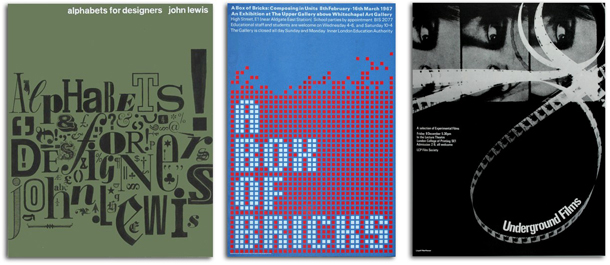
Early yearsearly years

DJ: How do you see mark-making it and what process do you go through to create and refine an identity?
Corporate identity is, of course, about much more than symbols and logos but it is, more often than not, the core mark that distils, encapsulates, and expresses the nature and identity of the organisation. I believe that to do this effectively, a mark has to be simple, timeless, and easy to memorise. And, the best way to achieve a mark with those qualities is through a process of refinement and reduction.
John Lloyd – MarksJohn Lloyd – MarksJohn Lloyd – Marks

DJ: When going through that process of creating an identity/brand, how were you able to judge whether the solution you’d created was right or appropriate in your earlier years before experience took over?
I have always studied the work of designers I admire to discover what makes a particular solution work so well. Saul Bass, Paul Rand, Chermayeff & Geismar, Massimo Vignelli, and Armin Hofmann, among others have, in many ways, been distant mentors. And, I have, over the years, avidly scrutinised the great design magazines: Graphis, Gebrauschgrafik, Print, Communication Arts, and Idea. As a kind of quality control, I would find myself thinking ‘now, how might Saul or Armin have tackled this?’

DJ: Did your approach evolve as you career went on?
We all learn from experience but my fundamental approach hasn’t changed: the striving for elegance, purity, and effectiveness have always been objectives. But, I have learnt a lot of practical things from a lifetime of implementing identities in all media – print, signs, environments, liveries, products, and digital. In this sense, my approach has become more pragmatic. I have also learnt that the greatest skill a corporate identity designer can acquire is the art of listening.

DJ: What culture did you try to impress on the younger designers that came to work under you?
At Lloyd Northover, these were our working principles:

Solve the client’s problem not your own: A brand should reveal the truth and essence of an organisation or service. Corporate design is about communicating the client’s identity, not your own. It has nothing to do with a designer’s self-expression.

Keep it simple: Creativity in design it is not about being crazy, wacky or ‘off the wall’ for its own sake. To be effective, a visual identity needs to be distinctive, legible, timeless, identifiable at a glance and memorable. The best designs achieve these aims through simplicity and clarity of form. Good corporate design is about achieving objectives through clear thinking and with the greatest economy of means. Unnecessary complexity indicates woolly thinking masquerading as creativity.

The best idea wins: Be consensus-oriented and encourage teamwork. Discourage individuals from ‘owning’ solutions. The objective should always be to find the right answer, and it doesn’t matter who has the idea, as long as it is the best solution.

Don’t rely on the computer: Computers can restrict the creative process. Use other media – drawing, painting, collage, photography – to stimulate ideas. Get out of the studio and look around. Try techniques involving randomness and chance. A designer needs to present himself with as many alternative options as possible from which to develop the most effective solution.

DJ: Having kept a relatively low profile throughout your formative years, the John Lloyd Archive is quite an extensive collection of work and a superb educational tool – what do you hope people will take from it?
The full range of what Jim Northover and I did together, and the quality of our work, was only occasionally promoted by us and, therefore, never fully appreciated. Much of my early work, too, has not been widely exposed. Graphic design is ephemeral; it is easily lost and forgotten and by publishing the archive I wanted to ensure that the work survived. After fifty years in the profession, and as an examiner and visiting educator at design schools, it occurred to me that the archive, which spans the decades from 1960, and includes some ground-breaking and influential projects, should be preserved. I hope it will be seen as a useful contribution to the developing history of British graphic design.

Rail icons

DJ: Do you think younger designers can learn from identity work that was created before computers were used extensively?
Yes. The fundamental principles of what makes a good corporate identity remain the same, irrespective of whether solutions are drawn by hand or by computer, or whether communications media are traditional or digital.

RailD&AD

DJ: You’ve said Saul Bass was a tremendous influence on your work, what was your connection to him prior to inheriting his Bass Yager studio after he passed.
I first came across the work of Saul Bass when I saw the titles for the films Carmen Jones and Psycho in my local cinema in the 1950s and 1960s. The various magazines I found in the LCP library introduced me to his corporate design work, which I greatly admired for its directness and freshness. I only met him once, and that was, much later, when Lloyd Northover designed the programme for ‘Transatlantic Shoptalk’, a conference of prominent US and UK designers at which Saul spoke. I never got to know him personally, but the influence of his approach was always with me. So, when, after his death in 1996, his business partner, Herb Yager, offered Jim Northover and me the opportunity to merge Lloyd Northover with the surviving Saul Bass practice in Hollywood, we accepted enthusiastically.

DJ: What was that experience like?
I remember, shortly after the merger, walking into Saul’s office on Sunset Boulevard. Many of his favourite images and examples of his work were still pinned to the cork wall behind his desk. It was as though he had stepped outside for a second and I found it quite an emotional moment. Although, I never had the chance to work with him, I did get to know, and work a bit with, Saul’s colleague, Jay Toffoli, who had participated as a designer in many of Saul’s great identity programmes.

DJ: How did you find Lloyd Northover’s move into Asia in comparison to your work in the UK and Europe.
We found that the Asian approach to corporate identity design and implementation was very compatible with our own. Our first project in the region was a major branding and implementation programme for the Airport Express in Hong Kong. We set up an office in Hong Kong and went on to develop the identity of the entire Hong Kong mass transit system. The next step was to open up in Singapore as well, where we created an island-wide branding and information system for the Land Transit Authority. We found that our clients in Hong Kong and Singapore were exceptionally well organised. They were very familiar with huge infrastructure projects and, consequently, their tendering and project management processes were highly sophisticated. Once a contract was agreed, with its milestones and deliverables clearly defined, everything worked efficiently, as it tends to do in Northern Europe.

Interestingly, we had much greater affinity with the Asian way of doing things than we did with the corporate cultures we found when attempting to work in the Latin countries of southern Europe.
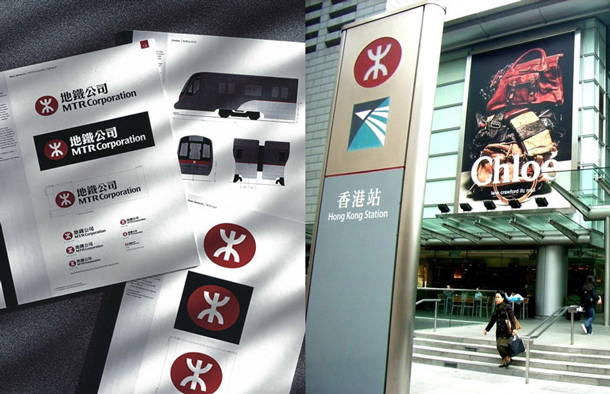
MTR

DJ: The influence of technology aside, how would you say branding is different now to say 20-30 years ago?
It’s hard to put technology aside because so many brands today exist primarily in digital form. We are all familiar with the big ones: Facebook, Twitter, Google, Amazon and so on. But, there is also a multitude of smaller online businesses that barely have a physical presence and clamour for attention through the small screens of digital devices. The broad principles of what constitutes a good brand remain the same, irrespective of media, but it is increasingly important to make sure that a brand is designed to be highly effective in the digital environment.

Another major difference between now and the way that branding was developed 20-30 years ago, is the rise of design management. In 1975, when we started Lloyd Northover, it was usual for working relationships between client and designer to be close. Client’s took designers into their confidence and treated us as partners. Now, there is often a buffer between the client and the designer – a professional design manager. Bidding and selection procedures have become much more formulaic – the designer may be kept at arm’s length, and I fear that the relationship of trust between client and designer is being eroded.
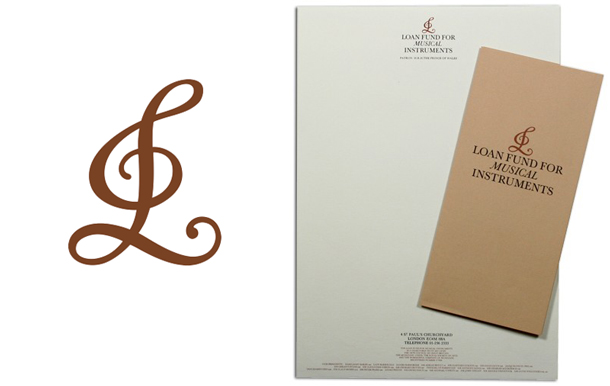
music loan fundVarious identities

DJ: Since retiring, do you still keep an interested eye what’s going on in the industry?
Yes. I read a lot, think and write about corporate design, and I have stayed pretty close to trends in design education, mainly as an external examiner. When you have spent a lifetime as a designer, it’s second nature to look at everything around you. I’m making new discoveries every day.

DJ: What do you make of the ‘new wave’ of design studios and the brands they’re creating and who do you see as today’s standard bearers of marque design?
The really big commissions still tend to go to the really big long-established consultancies. But branding is changing in that it’s much more about tribalism, belonging, and fluidity; consumers own and define brands as much as brand-owning corporations. Branding isn’t about one-way communications; it’s about engagement. It isn’t just about a share of the market; it’s about a share of the mind. The democratic digital networking channels play a key role in this. It’s easy for designers to be seduced by the technology; there is a tendency for too many visual gizmos to get in the way of crystal clear brand presence. Clarity should still be the name of the game.

Because the profession has grown so large globally, and become so fragmented, it is not easy to single out new standard-bearers. Nevertheless, a few influential champions of corporate identity design do spring to mind. David Airey, for example, practices as a brand designer in Northern Ireland, but also blogs and writes books on the subject, and influences a huge following; Tim Lapetino and Jason Adam of the design consultancy Hexanine, in the US, do likewise; while the American writer, Seth Godin, explores and promulgates new ways of thinking about marketing, branding and brand loyalty.

DJ: Having been involved in design education and with so many Graphic Design Degrees being offered these days, do you have any thoughts on how young designers can forge themselves in the industry?
The structure of the corporate design industry is changing. The days of the massive corporate identity consultancies with large teams of designers gathered in one place are on the way out. In the future, there will be fewer jobs in large design firms. Technology allows people to work at a distance in virtual offices and teams. And, experts will, when necessary, come together for specific projects, and then disband, as, for example, is the norm in the movie business. The important thing is to try to work on significant projects with the very best people in the field, and to make sure that the profession as a whole knows about you and your contribution. If your peers know and respect you, your fame will grow, and the work will come. If you are a good designer, I think the future is bright.

DJ: Is there any piece of work you’d like to revisit and refresh today?
The John Lewis identity has been tweaked by others, and not always for the better. I’d like to put that right.

DJ: What project, would you say, typified your career output or you found the most rewarding? Would you describe it as your legacy to the world?
There isn’t a single project that does that. I think my archive as a whole typifies my career.

DJ: Are you working on any projects at the moment?
Yes. I am working on a book about the very long history of corporate identity. And, I always have a painting on the go!

–––
We’re very grateful to John for sparing the time to talk to us, it is a genuine privilege. Time spent absorbing the John Lloyd archive, and digesting his reflections, can do no designer any harm at all. See the incredible work Lloyd Northover continue to produce here.


With love from Dowling Duncan

News

Generally, at any one moment in a day I’ll have a scribble pad on my desk, email pinging, phones ringing and twitter vociferating but occasionally, just occasionally, something cuts through the noise like a white light and it’ll make me stop to absorb. Sometimes they are large things that catch my attention, other times they come in smaller packages.

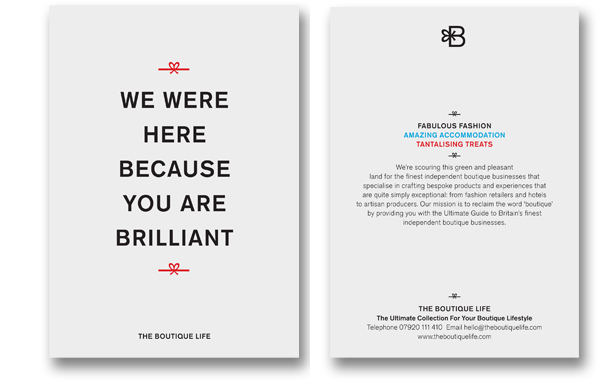
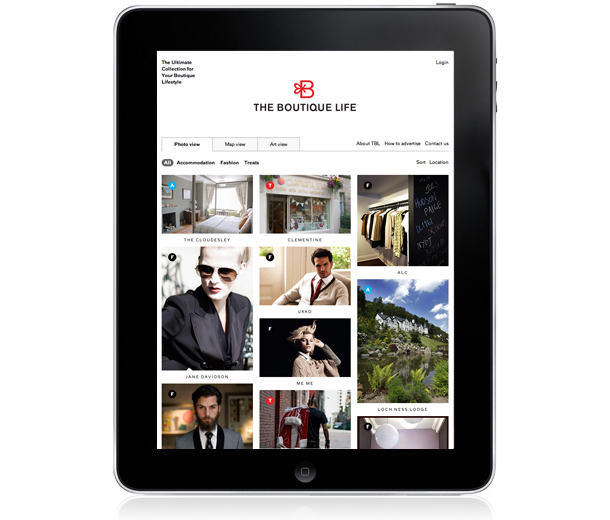
The latter arrived today courtesy of Dowling Duncan who unveiled a delightful new identity for The Boutique Life, a new online community which seeks and finds the finest independent boutique businesses in the UK that specialise in crafting bespoke products and experiences, ranging from fashion retailers and hotels to artisan producers.

DD helped develop a new name, descriptor, marque and visual identity to organising a new online presence which would become the doorway to their new venture. “We organised a team of designers, developers and wordsmiths to help us create a design toolkit which would enable The Boutique Life to approach and inspire boutique owners across the land to join and become part of their new ultimate collection.”

There are few things more satisfying than admiring a solution that is so simple, so pure, it couldn’t possibly have been anything else or exist in any other form. Timeless. Elegant. Effortless. Even down to the cute detail of the ribbon nick on the kick of the Q, the brand roundly affirmed with smart copy, the whole package is beautiful, exquisite, simple.

More reading here, appreciation shown here.

Mark
The Boutique LifeThe Boutique LifeThe Boutique LifeBagThe Boutique Life