Profiles – Matthew Haynes {Analogue/Digital Creative Conference}

Profiles

With this weeks special announcement that Sonia Rentsch, Melbourne’s cleverest of creatives, will be presenting at this year’s Analogue/Digital Creative Conference, Designers Journal caught up with conference founder Matthew Haynes to talk baseball, standing ovations and grass roots design as he gears up for the festival season.

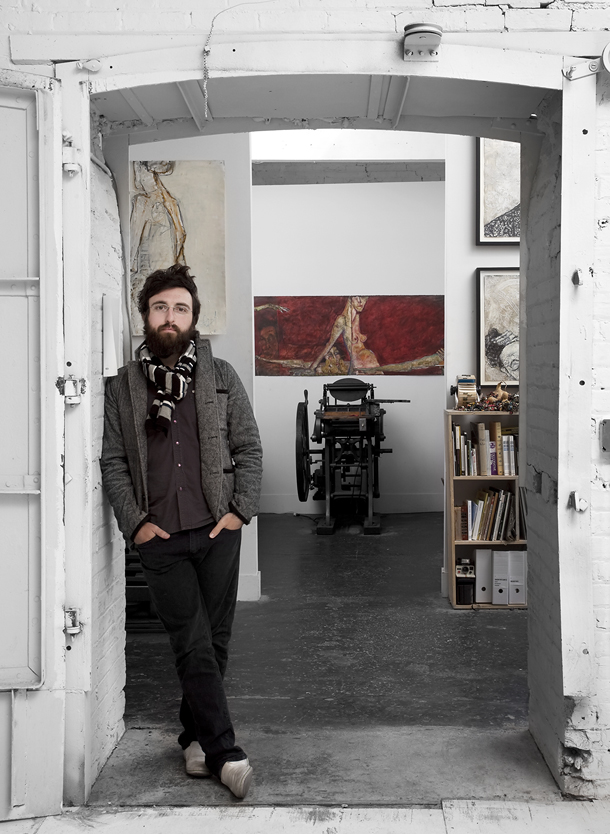
Returning for its second year, the Analogue/Digital Creative Conference shines a spotlight on the culturally starved Gold Coast and Sunshine Coast of Australia. Largely overshadowed by the lure of the nearby city of Brisbane, the state of Queensland has until recent years only had one focus for creative outlets. Insert one driven individual with one clear vision. Analogue/Digital features artists, directors and founders from the worlds most sought after companies and aims to be a guiding light for all students studying the creative industries within regional Australia. It’s our pleasure to introduce to you Matthew Haynes.

You wouldn’t think a career as a professional baseball player would result in the creation of a Creative Conference but Matthew Haynes isn’t your usual design graduate. Himself a forward thinking, Matthew has instilled these quality in his creative studio and work it creates, yet it’s his strong passion for culture that is causing waves in the conference world.

DJ: With an interesting start to your career, beginning with professional baseball and transitioning into the world of design, what was it about this medium that drew your interest?
I only ever excelled with graphics and tech studies in high-school. Once my baseball career was over it felt natural to use passions of architecture and design in forging my new career. I can’t say that baseball and design went hand in hand at all, but looking back, I would occasionally open Adobe Photoshop while traveling on the bus to help pass the time.

DJ: After graduating from University what was the draw to say on the Sunshine Coast? Was there a part of you that got drawn to the more cultural centres of design like Sydney or Australia?
The draw to stay on the Sunshine Coast is simply the way the cookie crumbled. I’ve been fortunate enough to sample the allure of Brisbane, Melbourne and Sydney and I can honestly say that it is nothing life changing. Although I am regionally based, it is foolish to completely discredit us – Big things come in small packages.

DJ: How did the idea come around to start your own design conference? What inspired you?
How the idea came about is a matter of opinion. That said, I can look you in the eye and say I was the one who had the vision and balls make it happen. I wasn’t necessarily inspired to start a conference but I was inspired to give regional students the same equal opportunities that the city students had. Semi-Permenant and AGideas had a massive impact on me and my career. I met so many people from going to these events and I wanted to do the same for my regional peers and next-generation designers.

DJ: What’s been your highlights of the previous events?
Biggest highlight is confirming Dare Jennings for Gold Coast 2011. His presentation on reinventing yourself gave me the balls to quit my job and follow my dreams. Dare helped me understand the importance of brand culture. Employing Dares approach has allowed me to make the most of my graphic design career. If you ever get the chance to hear this man speak – do it.


DJ: Do you ever get to relax during the event and enjoy the speakers, or is it a bit crazy behind the scenes?
Hosting an A/D Creative Conference will push you to the breaking point! We strive for perfection in every sense of the word. We run sleep deprived for weeks heading in. We double and triple check everything meticulously. Whatever it takes, we make it happen!

DJ: In your opinion, what makes a great design conference?
Cutting through the shit is the most important facet to a great conference. Listening to someone talk about how good they are is fucking boring. People want advice, insights and inspiration. For sure, mix some work but speak about process, innovations, challenges and things learned.

In one hand we encourage our presenters to be honest and talk about design-culture and design-business openly but you need to be open minded for what may or may not come out of their mouths. For instance: We’ve seen a presenter flash up announced images of dead people on the screen and comment “I’m a bit hung over and feel like this” (Bad). However we’ve also facilitated the growth of hundreds of creative students and junior designers (Good). The thing is, I wouldn’t have it any other way.

At the after party some people grab me and hug the shit out of me and say “thank you”. Its a weird but amazing gift.

DJ: Looking to this years event, what are you most looking forward to?
A standing ovation and the tossing of many roses at my feet. Jokes. Actually, we’re introducing an event dinner at Black Coffee Lyrics. I’m looking forward to that very much! It is important to me that all our presenters feel welcome and at home.

DJ: What’s your goal, ambitions and dreams for Analogue/Digital?
My goal is to provide regional students the same opportunity as those in the city centres. I wish to cultivate design minds from a grass roots level and build an event which is known for its unique and honest insights. For me, the importance to make change outweighs the important to line my wallet with greenbacks. If I am to earn money because of A/D, it will be due to the work and results I have achieved at LMOX, my personal design company.

I firmly believe that the time and effort I have put into A/D has made me a far better problem solver and designer. I truly understand and respect strategy so much more then I did 2 years ago. Design and strategy are like yin and yang. There are great designers every where but I do not see as many great thinkers or ideas man/woman.

DJ: With side projects like ‘The Book Project’ you are indeed a man of many talents, what other projects are you working on / planning?
We’re in the process of touring a film entitled ‘Design and Thinking’ with the Sunshine Coast Council, AGDA, DIA and urBNE Films.

I cant say too much but please watch the screener. The movie is lo-fi but has great content.


Analogue/Digital
Creative Conference
Gold Coast October 12th 2012
_

Featured Speakers:

Sonia Rentsch
Designer, still life stylist and art director… an true expert in crafting clever concepts into deceptively effortless scenes.

Anthony Lister
A trendsetter with an international following and a general disregard for borders, prolific street artist and painter.

Christopher Doyle
Australian graphic designer living and working in Sydney.

Joseph Allen Shea
An independent curator, publisher, writer, creative consultant and gallerist.

Numskull
Australian based artist who’s work includes painting, sculpture, illustration and outdoor murals.

Brendan McKnight
Former editor of Desktop magazine and is soon-to-be digital editor of Dumbo Feather.

Thomas Williams
Founder and current Creative Director of Melbourne-based design consultancy Hunt Studio and Process Journal.

Josh Price
Along with his brother Tull, founded custom footwear company FEIT.

Fb. Analogue/Digital

Studio Hi Ho {Melbourne}

Awesome agencies / LWC

While their name may conjure up images of seven smaller than average people marching to work with shovels and picks, Studio Hi Ho are in fact team of two and as far I can tell are of average height! With big ideas, creativity and the strategy to match they have been lighting up the streets of Melbourne for a number of years now and may I say, they doing a damn fine job. I am however still hoping they at least have some kind of studio theme tune and walk to work one behind the other.

www.studiohiho.com

Heroes – Henrik Kubel

Heroes

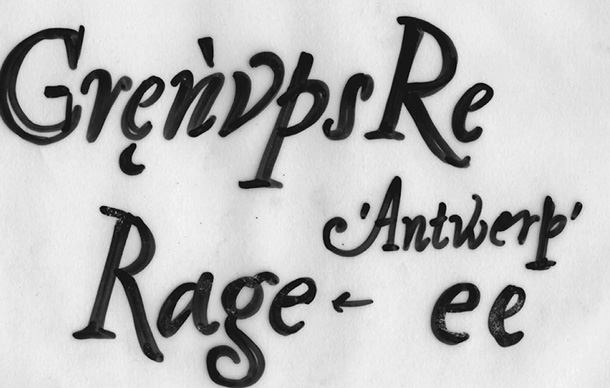
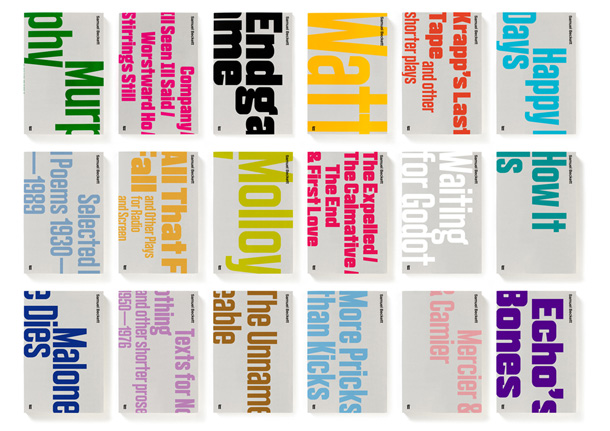
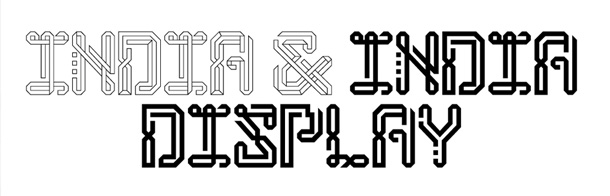
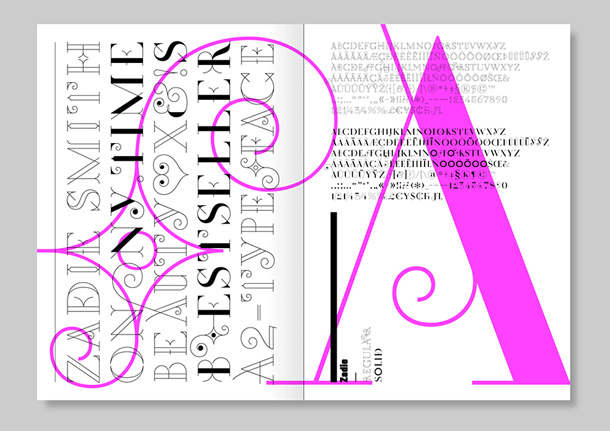
When we started this series the idea was to profile unsung designers who had been big influences on our design careers. The urge to write features on the likes of Saul Bass, Paul Rand or Otl Aicher has been strong but for the most part we’ve stuck to our guns and featured some very interesting, older spokesmen as well as a few younger designers that have amazed us with the work they’ve created in relatively short careers so far. This week we’re looking at one half of the design company A2/SW/HK, more specifically, Henrik Kubel. A2/SW/HK have been around for a while but have mostly gone under the radar, which is surprising when you look at their overall body of work, which it has to be said contains more than just the odd gem. The main reason why we’re such fans of Henrik Kubel though is his work in the field of typeface design. On top of the beautiful work that Henrik has created at A2/SW/HK, the amount of beautifully designed typefaces he has created is quite staggering.

To be fair not too much has been written about Henrik’s early years apart from the fact that he was born in Copenhagen, Denmark in 1972. He graduated from Denmarks Design School in 1997 and went on to complete a Postgraduate degree in Communication Art & Design at the Royal College of Art in 2000. He has also lectured in Typography and Design at Buckinghamshire Chilterns University College (2000-05), Denmark’s Design School (2006) as well as at Kingston University.
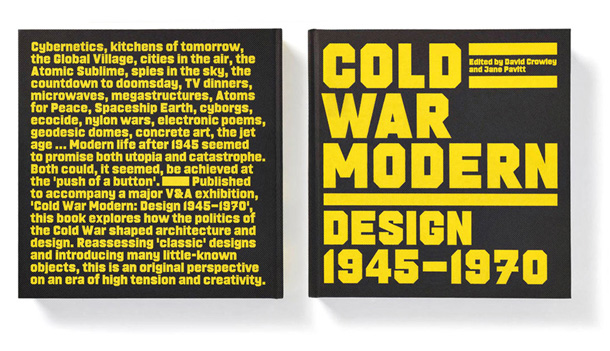
Henrik formed A2/SW/HK with business partner Scott Williams in 2000. Both are now members of Alliance Graphique Internationale (AGI), which is no mean feat considering their ages and shows how much they are respected within the upper echelons of the industry. A2-Type came out of A2/SW/HK in 2010. The type foundry was established to release and distribute over ten years worth of specially-crafted typefaces the company had created for client-based projects. In fact part of their philosophy has been to design a new font for every job they take on and drawing bespoke typefaces has become an important part of their design approach. The multi-award winning A2/SW/HK also have a very impressive client list which includes the likes of Tate Modern, Tate Britain, V&A Museum, MoMA (Design Museum, London), Wallpaper, Royal Mail and Penguin Press.

But back to those typefaces. Creating a perfectly fitting typeface for a specific project makes a lot of sense. It really adds to the idea of a custom-made design solution that’s informed by a clear grasp of both the content and the context. Henrik’s typefaces also have a really strong sense of cultural relevance. This, combined with the way they fit so perfectly with their projects makes the finished work so fascinating. The work also has a timeless quality which seems down to their refusal to use whatever font may be trending at that particular moment. One perfect example is the typeface ‘Zadie’ which was originally designed for the cover of Zadie Smith’s award winning novel ‘On Beauty’. The swirls within some of the letters and the way one letter compliments the next really is a thing of beauty. I wonder how many copies of the book were sold simply by the cover alone.

The same comments could be said about so many of the duos projects and scrolling through their inspiring one-page website expresses this in truly spectacular fashion. The site contains no fancy navigation or cleverly written copy boasting how they offer strategy as part of their process. Instead it simply shows one superbly crafted piece of work after another. It’s a website that has drawn me back time and time again in the hope of glimpsing a new project that may have been added. That fact that all this work (and type) has been created by just two designers is really quite mind boggling. It’s why I consider both Henrik Kubel and his partner Scott Williams to be design heroes. In 2010 Kubel was awarded the prestigious three year artist and designer working grant from The Danish Art Foundation. He is also a visiting lecturer at the Royal College of Art in London. How I wish I’d had a lecturer like him.

Henrik KubelHenrik KubelHenrik KubelHenrik KubelHenrik KubelHenrik KubelHenrik KubelHenrik KubelHenrik KubelHenrik KubelHenrik KubelHenrik KubelHenrik KubelHenrik KubelHenrik KubelHenrik KubelHenrik Kubel

Supply {Auckland}

Awesome agencies / LWC

A nice man from Supply recently took the time to email me personally and give me high fives for my blog, so in the vein of one good turn deserves another, here’s a high five right back at ya. Supply really do not need my words of praise, however, their work speaks for itself as you can see. While they can turn their clever hands to many a discipline, personally I have always admired their well crafted packaging design.

These boys and girls know how to use type, that’s for sure. Rochdale just so happens to be bloody delicious cider, New Zealand-ites give it a rock and roll if you haven’t already and while you sip away, feast your eyes on the fruits of Supply’s bloody sweat and tears.

Tw @hello_supply /  www.supply.net.nz

The Allotment – Partnerships Built to Last

News

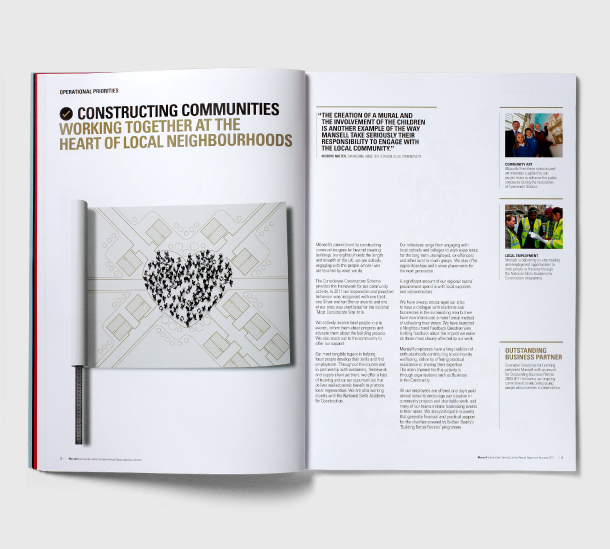
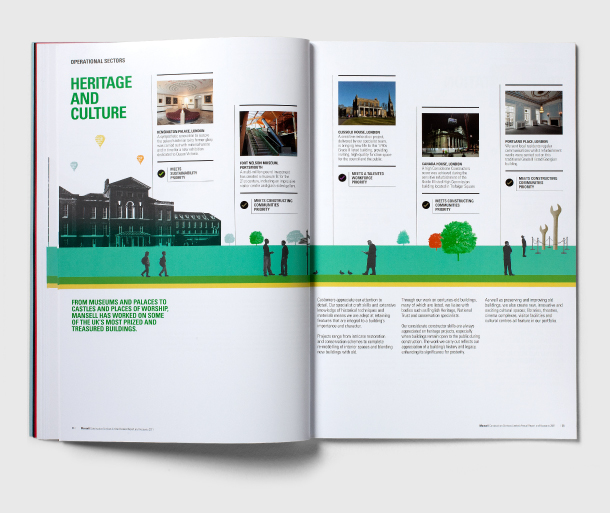
The Allotment have completed work on the Mansell Construction (a part of Balfour Beatty plc) 2011 Annual Report. Entitled Partnerships Built to Last, the striking publication is chock-a-block full of entertaining and off-beat illustration, created in-house by the Allotment guys themselves.

To fill you in, if you’re not too familiar with Mansell, they turn over in excess of £800m, operating out of over 20 offices around the UK, and have a workforce of around 2,000. Their focus is on developing long-term sustainable relationships with customers ranging from affordable and private housing through to defence and education. So, pretty hefty stuff.

They tasked The Allotment to create an absorbing annual report that not only built on their previous publications but reflected the key messages; Confidence, Customer Focus and Agility… and the guys duly delivered.

Says Allotment’s Creative Partner, Michael Smith; “the objective was to highlight Mansell’s successes in a tough marketplace, demonstrate how they have continued to deliver on their key operational priorities through a diverse and extensive range of projects.”

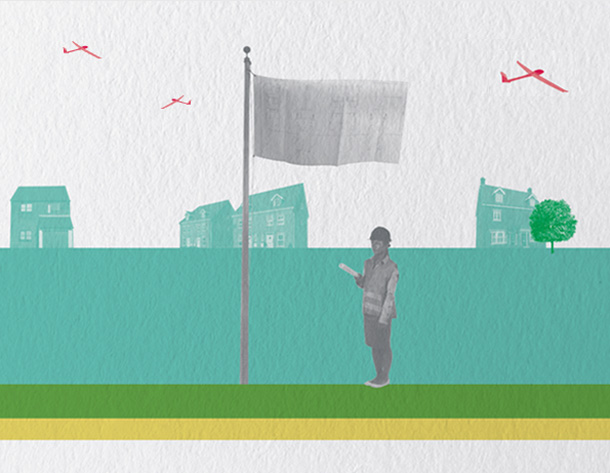
He continued; “We developed an idea based around the theme of ‘partnerships built to last‘. We captured this theme of sustainable, long-term customer relationships through the use of a bold illustrative style where people interact and contribute to the construction of their own communities. As well as creating a strong and consistently applied illustrative style for the report we also enhanced navigation between the various sections by creating clearer differentiation as well as linking project stories to strategic priorities through graphic ‘sign-posting’.”

In typical Allotment style, it’s intelligent and visually compelling stuff with the bespoke illustrations adding that twist of charm and humour that regularly comes out in their work – we’re fans.

Follow The Allotment on Twitter.

Allotment BrandAllotment BrandAllotment BrandAllotment BrandAllotment BrandAllotment BrandAllotment BrandAllotment BrandAllotment Brand

Profiles – Scott Thomas {Simple.Honest.Work}

Profiles

With a background in architecture, a bit of magic from ‘Click Through’ the pink unicorn along the way, and a focus for getting back to the hand and keeping things simple, Scott Thomas is a man architecting change. As the Design Director for Obama’s 2008 campaign, Scott, ‘Simple Scott,’ has a philosophy of simplification which has been illustrated in more recent years with the Noun Project.

We’re pleased as punch Scott managed to spare a few moments out of his very busy life and agreed to talk with us about loosing his wallet, not being original and a few projects along the way…

Photo credit. Mike Schwartz

DJ: Tell us a bit about yourself and your career journey?
I live by the idea that the simplest solution is the best one. Whether building a website or singing emails operatically the motivation has always been “less is more.” When I had free time I could be found at a letterpress fashioning original prints and collaborating with fellow members of the Chicago design collective known as, The Post Family. All that, and my dream of rationalizing the irrational theory of the golden ratio, came to a halt when I began working as the Design Director for the Obama Campaign. Soon enough, I found myself working on WhiteHouse.gov and trying to impress politicos with my Lincoln-like beard. When the historic election ended I felt that I should somehow record the work we completed in 2008. Two years later, I self-published Designing Obama, a chronicle on the role art and design played in the political campaign. Funding the project entirely with Kickstarter, I seemingly helped kickstart the kickstarter, by placing the platform in the public’s eye the project became known as arguably the first Kickstarter blockbuster. I’m still patiently awaiting Obamaʼs rave review. I since have continued working on great projects, Fast Company’s Co. Design, Co. Create, and Co. Exist, I tried to get Nike to #makeitcount on the Nike.com relaunch, helped the y-c backed, Optimizely perfect the A/B test, and finally co-founded The Noun Project enabling the world to communicate any idea visually. With my team at Simple.Honest.Work, we still have high hopes that we might just one day change the world.

DJ: From your work, it’s apparent that you have an ability to break projects down to their most simplest of forms. Is this something you have developed throughout your career or developed from project to project?
Simplicity isn’t something to achieve — it’s something to reach for. Every project, every problem, every solution can be simplified further. The shape of design shall forever be formed by its function and through the constant process of life its my hope we, as designers, continue to provide the most simplistic forms for the next generation to continue the journey.

DJ: What has been the most valuable lesson you’ve learnt and what is the best advice you’ve been given?
Mies van der Rohe said “I don’t need to be original, I only care to be good.” Originality is something I always struggle with, whether we know it or not, nothing we create is truly original. I didn’t fully understand this teaching until I traveled to Kyoto, Japan, where I discovered the oldest zen temple, Kenninji. There I found a garden called the Circle, Triangle, Square Garden. This place — zen in every way — with perfectly manicured rocks, delicate composition, and it’s perfectly joined wood surrounding the garden, I became possessed by it’s very nature, but what sticks with me more was the idea embedded in the garden. Based on the calligrapher and abbot Sengai Gibon, the circle represented the infinite without beginning and without end, the triangle represented the beginning of all forms, and the square, a double triangle, stands for the process of duplication. These are the basic forms we manipulate and repurpose to form everything in our world. It was such an important distilation of our work as designers, that I adopted these marks to represent the practice, it will forever be the most valuable lesson I have learned.

Photo credit. Mike Schwartz

DJ: With the Obama campaign you were thrust onto the media and the design circuit, do you still get time to experiment with typography, sketching, print making and letterpress?
I would cease to exist without sketching and experimentation. These things are my way of thinking. I’m one of the lucky ones, I get to experiment everyday, test things, build things, make things better and then question whether I did them right, and reiterate the same process. I don’t have as much time as once did to letterpress but that’s alright, it’s nice when I get the chance, it’s like going home to family you haven’t seen in a while.

DJ: What’s an average day in the life of Scott?
5:30am wake up. Go for run. Stretch. Shower. Eat breakfast. Grab coffee. 8am get to my studio. Work for 4 hours. No email, No meetings, No phone calls until after noon. Noon. Have lunch. Check my appointments, respond to email, have design reviews. 4pm back to work. 6pm go have dinner, drinks, 8pm time to reflect on the day, think, read. 10 or 11 head to sleep.

DJ: On the Post Family website you are described as ‘constantly trying to invent the next great thing’.
So Scott, what’s the next big thing?
I just lost my wallet. So, the next big thing is to reinvent credit cards. I think society is mentally disabled for using a small piece of plastic with a fuckin’ number on it to access the money we work so hard for (pardon my cursing, it’s the language of the passionate.) Look, I’m glad @Jack is working on Square, but even Square, like all other web services, are reliant on this stupid number, which seemingly changes all of time. How does this make sense? Why haven’t we solved this. That’s next. But right now I’m working on The Noun Project which is truly simplifying the way we navigate our complex world.

DJ: The Obama campaign has formed a significant piece of your career, do you now have a real fear or using shades of blue in your work as well as the Hoefler & Frere-Jones font Gotham?
There is a time and place for shades and blue and even applications where Gotham just seems right, so no I don’t fear it. I fear real things — like snakes.

DJ: Is there any project or any piece of design that you would really love to tackle, something you have not managed so far in your work?
I started studying architecture so I have a deep passion for designing space and environment. For that reason, I would love to design an airline. There is something about being able to have control over 300 peoples experience while in a compressed cabin, 30,000ft in the air and the bar is so low it wouldn’t be too difficult to make a dramatic shift in the entire industry.

DJ: What has been the soundtrack to your life?
Luckily I don’t care if I’m not original on this one. Amnesiac by Radiohead, with titles like Packt Like Sardines in a Crush, Pyramid Song, You and Whose Army, Knives Out, I Might be Wrong, The Morning Bell, Dollars and Cents, Hunting Bears, Like Spinning Plates, and Life in a Glass House, this is the soundtrack of my life. Thank you Radiohead.

DJ: Finally, how do you kick back outside of the office?
I enjoy spending time with Elaine Fong, my fiancé, and the light in my life. We like riding bikes, eating at the good foody spots in Chicago, and just being present.

Follow Scott on Twitter @simplescott


Mash {Adelaide}

Awesome agencies

Finally, someone has spoken what we were all thinking, writing the bio on your website is not fun, it is awkward and everyone feels a tiny bit silly having to do it! Mash sum the feeling up well by liking it to putting an ad in a singles column; I whole heartedly agree. It has to be said however, that if Mash were to place that ad I am in no doubt that their door would be battered down by randy suitors as they are pretty darned good looking themselves with a personality to match and dare I say it, judging by their bio, a GSOH also. Take a look, and judge for yourself…

www.mashdesign.com.au

Explorations in Indexing

Bookshelf / News

Index, the Auckland based design studio founded and run by Jonty Valentine and Amy Yalland, have just published their first book, ‘Explorations in Indexing‘. And what an exquisite piece of shelf-candy it is too…

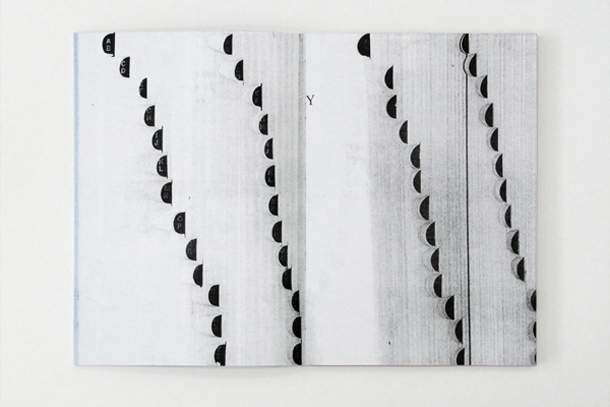
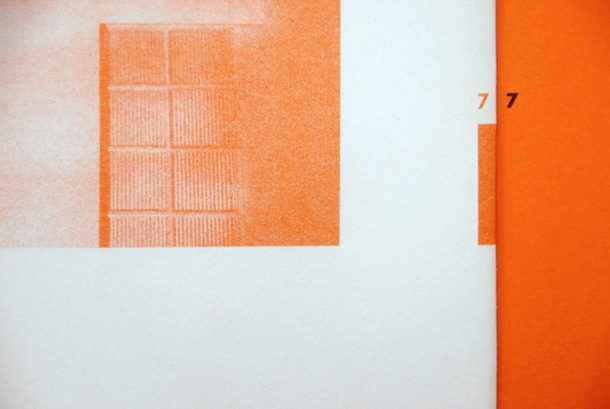
EiI the outcome of an open-ended exploration into the idea of indexing, functioning partly as a self-promotional device, the book is a sort of visual manifesto for the practice – it’s quite a stunning way to lay down the gauntlet and announce the arrival of the year old studio.

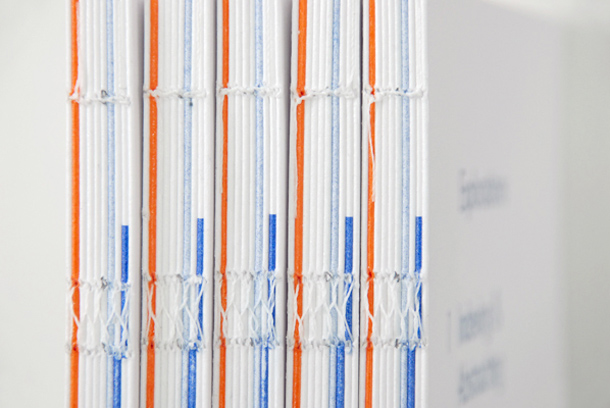
Says Amy; “We are interested in indexes (as the most ‘motivated’ of semiotic signs) because we are interested in seeing our work as the outcome of an exploratory, observational or documentary process. This is evident in the (mostly found) visual and written content of the publication, but also in our play with the aesthetics of production; particularly in the binding, and the idiosyncratic material quality of stencil printing.”

There’s only 50 of these handsome puppies available to buy and it’s yours, for a princely sum of just $50NZD, available here.

Get to know Index on Facebook.

IndexingIndexingIndexingIndexingIndexingIndexingIndexingIndexingIndexingIndexing